
Barber
Classic straight-razor shave: what it is and why it's worth paying for
There are experiences that feel like they belong to another era: the scent of warm shaving cream, the soft sound of a blade gliding across skin, the feeling that someone else is taking care of you with their full, unhurried attention. The classic straight-razor shave is exactly that — but it is not nostalgia. It is a technique that remains relevant because it works, because it cares for the skin in a way no razor can replicate, and because, done well, it leaves a result that feels different from the very first moment.
If you have never had one, you probably have reasonable questions: Is it safe? Does it hurt? Is the price difference over a conventional shave actually worth it? This article answers all of that calmly, without exaggeration. The goal is that by the time you finish reading, you have enough information to decide whether this service fits what you are looking for in your skin care routine.
And if you have already sat in a barber’s chair with a blade in play, you may find here the explanation for why that experience felt so unlike anything else.
What exactly is a classic straight-razor shave
A classic straight-razor shave is a barbering ritual that uses a steel blade — either a traditional straight razor or a replaceable-blade razor — to remove facial hair with precision, flush to the skin. Unlike an electric razor, which cuts hair above the skin’s surface, the blade works directly on it, producing a cleaner, longer-lasting result.
The process does not begin with the blade. It begins much earlier: with skin preparation. A trained barber opens the pores with heat — either a hot towel or steam — applies a pre-shave oil to protect the skin barrier, and then works a shaving cream or soap into a dense lather that cushions the blade’s path. Only then does the shave begin, carried out in two or three passes following the direction of hair growth to minimize irritation.
What sets this service apart from any quick shave at home is the combination of technique, products, and time. Every step has a purpose, and skipping one affects the outcome. That is why, when done correctly, the skin is left smooth, free of redness, and without the burning sensation that many people mistakenly associate with shaving in general.
The history behind the blade: why it is still relevant
The straight razor has a long history. For centuries it was the only tool available for professional shaving, and barbers across different cultures developed their own techniques for using it safely and precisely. With the arrival of the safety razor in the early twentieth century, and later the electric shaver, straight-razor shaving came to be seen as a relic of the past.
In recent decades, however, there has been a genuine return to traditional barbering. This is not a passing trend. It has to do with something more concrete: many men found that their skin responded better to a straight razor than to multi-blade cartridges or electric shavers. Less irritation, fewer ingrown hairs, a better finish. The technique never disappeared; it simply waited for people to pay attention to it again.
Today, in cities like Bogotá, the classic shave has found its place in barbershops and spas that understand that the client experience does not end with a haircut. It is a service that complements a more mindful male grooming routine.
What happens to your skin during the process
One of the least-discussed aspects of a straight-razor shave is its effect on the skin beyond simple hair removal. When the blade passes over the skin’s surface at the correct angle, it performs a gentle mechanical exfoliation: it removes dead cells from the outermost layer of the epidermis. This leaves the skin with a more even texture and improves absorption of the products applied afterward.
After the shave, the barber applies a soothing product — usually a post-shave balm or lotion — that helps close the pores, calm any temporary redness, and restore hydration. This step is just as important as the shave itself. Skin that is properly treated after the blade does not itch, does not burn, and does not stay red for more than a few minutes.
For those who struggle with recurring ingrown hairs, a straight-razor shave can make a noticeable difference. Ingrown hairs typically appear when a blade bends the hair inward rather than cutting it cleanly. A straight razor, with a single well-honed edge and the right angle, cuts more cleanly and reduces that tendency. It is not a medical solution, but it is a technique that, with consistency, improves the situation for many people.
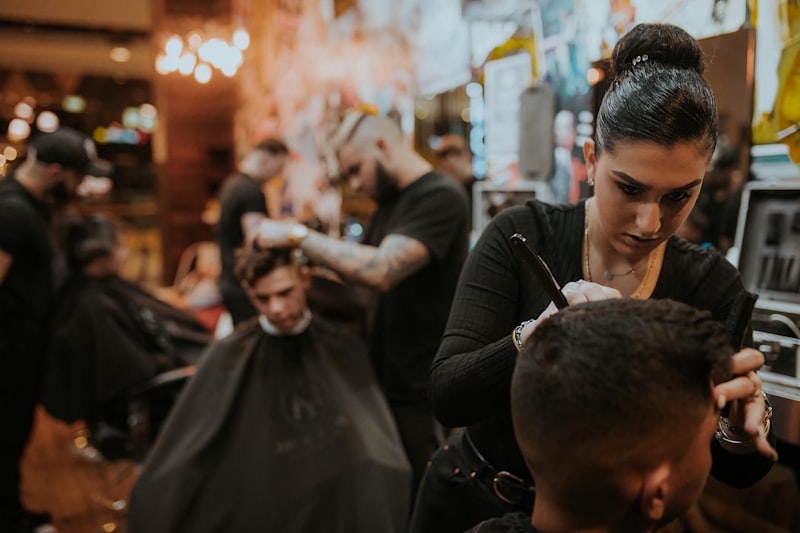
How to recognize a well-executed classic shave
Not all straight-razor shaves are equal. The difference between a pleasant experience and an uncomfortable one almost always comes down to preparation and the barber’s technique, not the tool itself. These are the steps a complete, well-executed service should include:
- Initial cleanse: the skin must be clean before starting. Some barbers apply a specific product; others work with warm water.
- Pore-opening with heat: a hot towel or steam applied for several minutes softens the hair and prepares the skin to receive the blade without resistance.
- Pre-shave oil: creates a protective layer between the skin and the blade. It is not optional in a quality service.
- Shaving cream or soap worked into a lather: a dense lather lubricates the blade’s path. Product quality matters.
- Progressive shaving passes: first with the grain, then at a diagonal, and if greater precision is needed, against the grain — each pass with a fresh application of cream.
- Post-shave product: a balm, lotion, or soothing cream to close pores and calm the skin.
- Final moisturizer: some services include a hydrating cream as the closing step of the ritual.
If any of these steps is skipped, the result suffers. A barber who bypasses preparation to go straight to the blade is not offering a classic shave; they are using a straight razor instead of an electric one — which is not the same thing.
Why it makes sense to pay more for this service
The question many people ask is a fair one: if I can shave at home in five minutes, why invest time and money in a barbershop shave? The answer has several layers.
The first is technical. An experienced barber knows the correct angles, pressure, and direction for every area of the face. The neck, jawline, and area beneath the nose are especially difficult to work on yourself with precision. A professional reaches those zones with a level of control that is hard to replicate in front of a mirror.
The second is products. Barbershops that offer classic shaves work with supplies of a different quality than what is found in a supermarket. Professional shaving creams, pre-shave oils, and post-shave balms have formulations that better protect the skin and leave a longer-lasting finish.
The third, and perhaps the most underrated, is the experience itself. Sitting down, closing your eyes, and letting someone else take care of you for nearly an hour has real value for your well-being. It is not an empty luxury; it is time dedicated to yourself — no screens, no rush, with another person’s full attention. For many men, the classic shave becomes a regular self-care practice that has as much to do with mental health as with appearance.
At Aqua Belleza Spa, the barbering service is designed from exactly that perspective: not as an errand to run, but as part of a wellness routine. If you would like to see the available services and current pricing, you can find them on the Services page.
When to choose a classic shave — and when not to
A straight-razor shave is a good option for most men, but there are situations where it is worth discussing with the barber before proceeding.
If you have active acne with open or inflamed lesions, the blade can irritate those areas. In that case, the barber can work around the affected zones or suggest waiting until the skin is in better condition. The same applies if you have a specific skin condition: a conversation beforehand is always the most sensible approach.
On the other hand, if your skin tends to react badly to multi-blade cartridges or electric shavers, a straight-razor shave may be exactly what you need. The problem in those cases is usually the excess friction and dragging caused by multiple blades — something a well-handled straight razor does not reproduce.
For those who wear a full beard and only want to clean up the edges, a classic shave is also ideal. The precision of a straight razor along the neck, cheeks, and beard line is difficult to match with any other tool.
If you have questions about whether this service is right for you, you can reach us through the Contact page before booking. The team can guide you based on your skin type and what you are hoping to achieve.
How to prepare for your first appointment
Arriving well prepared for your first classic shave makes the experience more comfortable and the result better. A few practical points:
- Arrive with clean skin. There is no need to shave beforehand; the barber handles everything.
- A few days’ worth of stubble is fine. In fact, two or three days of growth responds very well to the blade.
- Avoid applying alcohol-based products to your face the day before, as they can dry out the skin and make it more sensitive.
- If you use any topical medication on your face, mention it before you begin.
- Relax. Tension in the facial muscles makes the barber’s work harder and can cause more discomfort.
Aqua Belleza Spa is located at Cra 11 #98-14, in the Chicó neighborhood in northern Bogotá, near Calle 98. It is an easily accessible area with good parking options nearby. You can book your appointment directly on the Reservations page and arrive knowing that the time you are investing is well spent.
A classic straight-razor shave is not something you do every day, but for those who discover it, it tends to become a recurring appointment — not out of habit, but because once you experience the difference, it is hard to settle for less.
Related links
Frequently Asked Questions
- Is a straight-razor shave safe for sensitive skin?
- Yes, as long as the barber properly prepares the skin with steam and the right products. A correctly honed blade applies less pressure than an electric razor, which reduces irritation when the technique is sound. If your skin is highly reactive, let the barber know before they begin.
- How often is a classic shave recommended?
- It depends on how fast your beard grows and how you want to maintain it. For those who prefer a very clean look, once a week or every ten days is usually enough. For longer beard maintenance, sessions can be spaced further apart and combined with a line-up.
- Can I shave with a straight razor at home after having it done at the barbershop?
- Technically yes, but it takes practice, a well-honed blade, and the right products. The recommendation for beginners is to learn the technique in a professional setting before attempting it alone, especially in tricky areas like the neck and jawline.
- What is the difference between a straight razor and a safety razor shave?
- A straight razor exposes the full blade and lets the barber control the angle with pinpoint precision; it requires professional skill. A safety razor has a guard that covers part of the blade and is more manageable for home use. Both deliver a cleaner cut than an electric razor, but a straight razor in expert hands produces the most precise finish.
- How long does the service take?
- A complete classic shave — including skin preparation, cream application, shaving, and aftercare — takes approximately forty-five minutes to one hour. Times may vary depending on beard type and any additional steps included in the service.