
Body & Massage
Sports massage: what it's for and who really needs it
If you train regularly or have a job that puts a lot of demand on your body, you probably know the feeling: tight muscles that never quite let go, a fatigue that rest alone doesn’t fully clear, or a spot that always feels “loaded” no matter how much you stretch. Sports massage exists precisely to address that, with a different logic from a traditional relaxation massage.
It isn’t a luxury reserved for elite athletes, nor a clinical procedure that requires a medical prescription. It is a body-care tool with specific techniques aimed at muscle tissue under physical stress. Understanding what it does and when it makes sense to use it helps you make better decisions about your own body — and get the most out of every session.
In this article we explain how sports massage works, who it’s right for, what happens in the body during and after a session, and how to prepare so you get the maximum benefit.
What sports massage does that other massages don’t
Sports massage is not simply a massage with more pressure. It uses a specific set of techniques — including deep effleurage, petrissage, cross-fiber friction, and compression — that work on muscle tissue at different layers and in different directions. The goal is not just to relax, but to influence the quality of muscle tissue and local circulation.
One of the most important distinguishing techniques is cross-fiber friction, which works perpendicular to the muscle fibers. This technique is used especially in areas where adhesions or scar tissue limit movement. It isn’t comfortable in the moment, but its effect on tissue mobility is noticeable over the medium term. Deep effleurage, on the other hand, works in the direction of venous and lymphatic flow, promoting circulatory return and the elimination of metabolites that accumulate after exertion.
Another differentiating element is the postural and functional assessment a good therapist performs before the session. Someone who runs marathons is not worked the same way as someone who spends eight hours a day lifting heavy loads. The approach varies according to movement patterns, the areas under the greatest demand, and where the person is within their training or activity cycle.
What sports massage is for, depending on when it’s applied
Sports massage doesn’t have a single function; its purpose changes depending on when it is applied in relation to physical activity.
Before exertion (preparation massage): Here the goal is to activate circulation, raise tissue temperature, and prepare the muscle for movement. The techniques are faster and more superficial, with a stimulating effect. Deep work is not the aim, because the muscle needs to be ready to perform — not in recovery mode.
After exertion (recovery massage): The logic here is different. The muscle has worked hard; there are accumulated metabolites, the natural micro-tears that come with effort, and residual tension. The recovery massage uses slower, deeper techniques to promote circulation, reduce tension, and support the tissue-repair process. Many athletes report that with regular recovery massage they return to training with better quality in less time.
Between training cycles (maintenance massage): This is perhaps the most underestimated type. It doesn’t respond to a single event but to the accumulation of tension over time. Its function is to prevent minor overloads from becoming major injuries, and to maintain the quality of muscle tissue throughout a season or an active lifestyle.
Who benefits from sports massage (and it’s not just marathon runners)
There is a widespread idea that sports massage is for high-performance athletes. That’s understandable, because that’s where it has been most documented and popularized. But the reality is that the profile of people who benefit is much broader.
Anyone who exercises regularly — whether at the gym, in spinning classes, in amateur soccer, or in intensive yoga — accumulates muscle tension that rest and stretching alone don’t always resolve. Sports massage addresses that load in a more direct and efficient way.
There is also a group that often doesn’t identify as “athletes” but has a very similar physical profile: people with physically demanding jobs. Warehouse workers, nurses, hairdressers, construction workers, professional kitchen cooks. All of them subject their bodies to repetitive and postural stresses that generate exactly the same type of accumulated muscle tension as sport does. Sports massage works just as well for them.
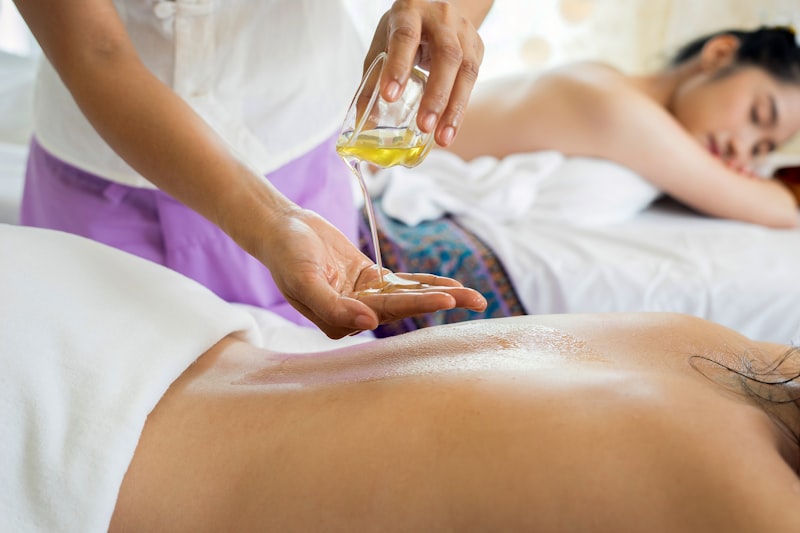
What the body feels during and after the session
During a sports massage it is normal to feel more pressure than in a relaxation massage. In areas with built-up tension or adhesions, there may be some discomfort. It should not be sharp or unbearable pain; if it is, tell the therapist immediately so they can adjust the technique or pressure.
Immediately after the session, many people feel a combination of relief and a certain heaviness in the muscles that were worked. This is normal and generally fades within a few hours. The body has received intensive work on the tissue and needs time to integrate that stimulus.
In the hours that follow — and especially the next day — most people notice improved mobility, reduced tension in the areas that were worked, and an overall sense of greater ease. Some feel a mild sensation similar to the day after a hard workout, especially if there was a lot of accumulated tension. That is a sign the tissue was worked deeply, not that something went wrong.
How to prepare to get the most out of it
Preparing for a sports massage is straightforward, but it makes a real difference in results.
Arrive well hydrated. Hydration directly affects the quality of muscle tissue and the body’s ability to clear the metabolites mobilized during the massage. Before and after the session, water is your best ally.
Let the therapist know about your recent physical activity, the areas that feel most tense, any past or present injuries, and whether you are taking any medication that affects circulation or sensitivity. This information allows them to tailor the work to your actual situation rather than a generic protocol.
Avoid eating a heavy meal right before. You don’t need to arrive on an empty stomach, but a large meal shortly before the session can cause discomfort, especially if the work includes the abdominal or lower-back area.
Sports massage and other body treatments: how they complement each other
Sports massage doesn’t have to be the only resource in your body-care routine. Depending on your goals, it can pair very well with other treatments.
Lymphatic drainage, for example, works on the lymphatic system with much gentler and more superficial techniques. It doesn’t replace sports massage, nor the other way around, but if there is fluid retention or residual inflammation after intense exertion, drainage can be a useful complement. Slimming massages, which target circulation and adipose tissue, serve a different goal and can also coexist with sports massage at different points in a care cycle.
If you are thinking about incorporating sports massage into your routine, the most useful step is to talk with the therapist about your specific goals. At Aqua Belleza Spa, in northern Bogotá on Cra 11 at Calle 98, the team approaches body treatments in a personalized way, adapting techniques to each person’s profile. You can see the full range of treatments on the Services page and, when you’re ready, book your appointment on the Reservations page.
What matters most is that sports massage not be something you do once when you can no longer stand the tension. It works best as part of a routine, integrated into the way you care for your body on a regular basis. Muscle that is worked consistently responds very differently from muscle that only gets attention in a crisis.
If you have questions about which body treatment best fits your situation, you can also reach us through the Contact page. Sorting that out before you book is always worth it.
Related references
Frequently Asked Questions
- Does sports massage hurt?
- It can cause some discomfort in areas with built-up tension, but it shouldn't be sharp pain. A good therapist adjusts the pressure to your tolerance and asks for feedback throughout the session.
- How many sessions do I need before I notice results?
- It depends on your goal. For targeted recovery after an intense physical event, one session is usually enough. For improving mobility or managing chronic tension, a cycle of several spaced sessions delivers better results.
- Can I work out on the same day I get a massage?
- If the massage is a preparation massage (before exercise), yes. If it's a recovery massage (after exercise), the recommendation is to give your body at least 24 hours of relative rest before going back to full intensity.
- Is sports massage only for high-performance athletes?
- No. Anyone with regular physical activity, a physically demanding job, or accumulated muscle tension can benefit. It is not exclusive to professional athletes.
- Should I mention any injuries before the session?
- Yes, always. Letting the therapist know about recent injuries, surgeries, health conditions, or medications you are taking allows them to adapt the technique and avoid contraindicated areas.