
Waxing
How long should hair be for waxing? Complete guide
One of the most common questions before a waxing appointment is also one of the easiest to answer: how long does hair need to be for wax to work properly? The answer exists, it is specific, and knowing it in advance can make the difference between a clean session and a halfway result.
Arriving with hair at the wrong length is one of the most common mistakes — not because clients do not bother to prepare, but because no one had explained it clearly. Hair that is too short and the wax will not grip. Hair that is too long and the experience is more uncomfortable than it needs to be. There is an optimal range, and it is worth understanding why it exists.
This guide covers that range, how to prepare in the days leading up to your appointment, what to expect during the process, and how to care for your skin afterward. If you already have experience with waxing, you may find details you did not know. If this is your first time, here is everything you need to arrive ready.
Why hair length matters so much in waxing
Wax works by adhering to the hair and pulling it out from the follicle. For that to happen correctly, the hair needs to be long enough for the wax to wrap around it completely before being removed. If the hair is too short, the wax has nothing to hold onto and simply breaks it off at the skin’s surface instead of extracting it from the root. That not only leaves the result incomplete, but also speeds up regrowth because the follicle was not properly stimulated.
When hair is pulled from the root, the follicle is left empty and needs to regenerate. That process takes longer than when hair is simply cut. This is why waxing, done correctly and with the right hair length, produces results that last longer than shaving: the skin stays smooth for longer because the growth cycle restarts from scratch.
Length also affects comfort during the session. Excessively long hair increases tension on the skin at the moment of the pull, which can make the experience more uncomfortable. The optimal range is not arbitrary; it reflects how hair behaves inside the follicle and how it interacts with the wax at the moment of application.
The ideal length range: from half a centimeter to one and a half centimeters
The consensus among estheticians is clear: hair should measure between half a centimeter and one and a half centimeters for wax to work at its best. A useful visual reference is to compare it to the length of a grain of rice, which is around five millimeters. That is the minimum starting point.
Below that threshold, the wax cannot wrap around the hair evenly. The result is that some hairs come out from the root, others break halfway, and short hairs reappear within a few days. Many people interpret this as “waxing just does not work for me,” when in reality the problem was the hair length at the time of the appointment.
Above one and a half centimeters, the hair starts to work against you. Not because the wax cannot grip it, but because the greater length creates more resistance during the pull and can make the session more uncomfortable. On top of that, very long hair tends to tangle or fold under the wax, making even application more difficult. If you arrive with hair longer than recommended, your esthetician can trim it before getting started.
How to calculate how long to wait before your appointment
The time you need to reach the right length depends on where you are starting from. If you have been shaving, the hair grows from the skin’s surface and needs between two and four weeks to reach the recommended minimum length. If you are coming from a previous waxing session, regrowth is finer and may take a little longer to become visible, but the length is reached in similar timeframes.
The area of the body also plays a role. Leg hair tends to grow more slowly than underarm or bikini-area hair. Underarms, for example, grow faster and may be ready for a new session before other areas. Knowing your own growth rhythm helps you plan appointments ahead of time.
A practical sign: when you can pinch the hair between two fingers and feel that it has some body to it, it is ready. If you can barely see it but cannot pick it up with your fingers, it is probably still too short.
Preparation in the days before your appointment
Beyond length, there are other things you can do to arrive in the best possible condition. Exfoliating the skin two or three days before your appointment helps free any hairs that might be trapped beneath the surface. This reduces the likelihood of ingrown hairs after the session and makes it easier for the wax to work on hairs that are fully exposed.
On the day of your appointment, arrive with clean skin and no creams or oils on the area to be waxed. Moisturizers and oils form a barrier that reduces the wax’s grip. Clean, dry skin allows the wax to adhere evenly and the pull to be more precise.
If you are waxing an area that has been recently exposed to the sun, wait until the skin has fully recovered. Tanned or sunburned skin is more sensitive and reacts more intensely to the traction of the wax. The same applies if you have any active irritation, cuts, or breakouts in the area.
What to expect during the session and how it feels
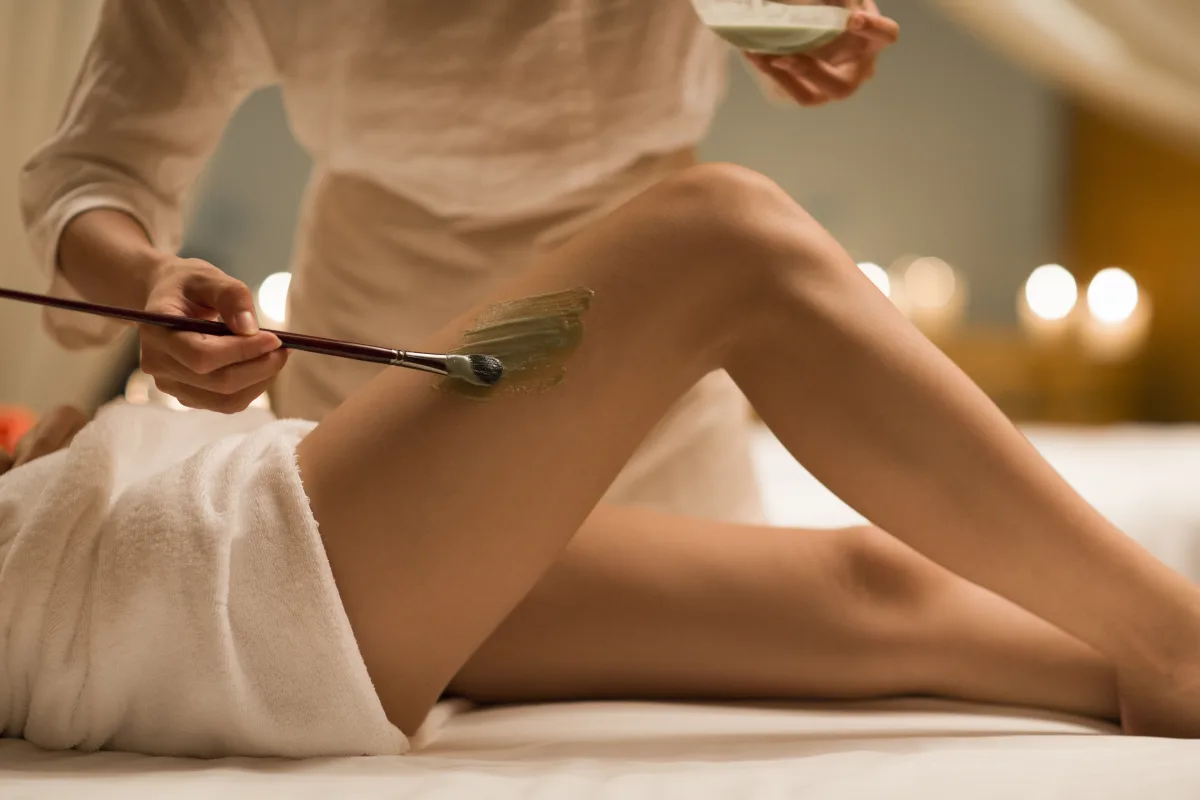
A well-executed waxing session is quick and methodical. The esthetician applies the wax in the direction of hair growth, lets it set for a few seconds, and removes it in the opposite direction. That movement against the direction of growth is what allows the hair to come out from the root cleanly.
The sensation is a brief, concentrated pull. It is uncomfortable, yes, but it passes quickly. Most people describe the first pull as the most intense and say that the skin adjusts as the session goes on. Areas with thinner skin, such as the underarms or bikini area, tend to be more sensitive than the legs.
At Aqua Belleza Spa, located at Cra 11 #98-14 in Chicó, the hair removal service includes both wax and threading, depending on the area and each client’s preference. If you have questions about which technique is best suited for you, you can ask directly when booking your appointment on the Reservations page.
Skin care after waxing
The first few hours after waxing are the most important for aftercare. The skin is left with open follicles and is more susceptible to irritation, heat, and fragranced products. Avoid direct sun exposure, intense exercise, and very hot showers for the first twenty-four hours.
Apply a soothing gel or fragrance-free lotion to calm any redness, which is completely normal and usually fades within a few hours. Avoid alcohol-based deodorants if you have just waxed your underarms, as they can sting on freshly treated skin.
From the third or fourth day onward, you can resume gentle exfoliation of the area to keep the skin clear and help regrowth come through without obstruction. Keep the skin well moisturized in the weeks that follow: well-hydrated skin makes it easier for hair to grow outward rather than curling back under the surface.
Over time and with consistency, many people notice that hair comes back finer and sparser with each session. That does not happen overnight, but it is one of the real benefits of maintaining a long-term waxing routine.
When to check with your esthetician before your appointment
There are situations where it is worth reaching out before you arrive. If you are using retinoids or exfoliating acids on the area you want to wax, your skin may be more sensitive than usual and the wax could react more intensely. The same applies if you are taking any medication that affects skin sensitivity.
If this is your first time getting waxed, or if it has been a long time since your last session, mention it when booking. That way the esthetician can adjust the session time and prepare to work with hair that may be coarser than usual. There is nothing to worry about, but that information helps everything go more smoothly.
You can browse all available hair removal services along with current pricing information on the Services page. If you have any specific questions before your appointment, you can also reach us through the Contact page.
Related references
Frequently Asked Questions
- What happens if the hair is too short for waxing?
- If the hair is less than half a centimeter long, the wax cannot grip the follicle properly and the result will be incomplete. You end up with areas where the hair breaks off at the surface instead of being pulled from the root, which speeds up regrowth and can irritate the skin more. The best thing to do is wait a few more days before your appointment.
- What if the hair is too long — more than two centimeters?
- In that case, the specialist can trim it before applying the wax. You do not need to do it yourself at home; in fact, doing so without proper guidance can leave the length uneven. Just let your esthetician know when you arrive and she will take care of it.
- How long do I need to let my hair grow after shaving?
- It depends on the area and each person's growth rate, but in general you need between two and four weeks from your last shave to reach the recommended minimum length of half a centimeter.
- Does waxing hurt more when the hair is longer?
- Yes, very long hair can make the experience a little more uncomfortable because there is more surface contact with the follicle. That is why the optimal range of between half a centimeter and one and a half centimeters matters: long enough for the wax to grip well, without the excess that increases discomfort.
- Can I get waxed if I have sensitive or irritated skin?
- If the skin is irritated, sunburned, cut, or experiencing an active breakout, the most sensible approach is to wait until it has recovered. Wax applies traction to the skin and can worsen a pre-existing irritation. Check with your esthetician before your appointment if you have any active skin condition.
- How often should I get waxed to maintain results?
- Most people come back every three to four weeks. Over time, hair tends to grow back finer and sparser, which means sessions become more spread out and the experience more comfortable.