
Facials
Types of facial masks at the spa: what each one does and when to use it
If you have ever walked into a spa and been asked what type of mask you would like, chances are you answered “whichever you recommend” without really knowing why one differs from another. That is a completely valid response, because the variety is wide and the names are not always intuitive. Clay, alginate, plaster, enzymatic, hydrogel sheet — each one has its own logic, ingredients, and specific purpose.
Understanding the differences is not just technical curiosity. When you know what each mask does, you can have a more productive conversation with your esthetician, arrive at your appointment with realistic expectations, and get more out of your results. This article explains, without beating around the bush, the main types of facial masks used in professional spas, what each one is for, and what you can expect before, during, and after treatment.
Bogotá skin has its own quirks. The altitude, cold nights, and strong midday sun create a combination that dries and irritates easily, and that directly influences which type of treatment makes the most sense depending on the season and the current state of your skin.
Clay masks: deep cleansing and sebum control
The clay mask is probably the best-known type and also one of the most misunderstood. Many people assume it is simply for “oily skin” and leave it at that, but the reality is more nuanced. There are different types of clay — kaolin, bentonite, and green clay, among others — and each has a different level of absorption and astringency.
Kaolin, for example, is gentler and is frequently used on combination or sensitive skin that has areas with excess sebum but does not tolerate more aggressive ingredients well. Bentonite, on the other hand, has a much greater absorption capacity and is reserved for skin with visibly enlarged pores or a tendency toward breakouts. Green clay falls somewhere in between and is quite versatile.
What they all do is similar: as the mask dries on the skin, it creates a kind of suction that draws impurities out from inside the pore. They also have a mildly exfoliating effect when removed. The immediate result is a more matte complexion, visually smaller pores, and a more even texture. It is not a permanent effect, but it is real and noticeable.
Alginate masks: the gold standard for hydration in the professional spa
Alginate is derived from seaweed and has a characteristic that makes it special in the spa context: it is mixed on the spot, applied in layers, and sets into a solid, flexible sheet that peels off in one piece when the treatment is done. That unique texture is not just for show; it serves a function.
As it sets, the alginate creates an occlusive seal over the skin that boosts the absorption of any ingredients applied beforehand — whether a serum, a vitamin C ampoule, or a hyaluronic acid concentrate. In simple terms, it acts like a hydration chamber: it retains body heat, prevents evaporation, and allows active ingredients to penetrate more deeply than they would if left exposed to the air.
The sensation during treatment is unusual the first time: the mask feels cold on contact, then warms up with the heat of the skin, and finally firms up. It causes no pain or discomfort, only a gentle tightening sensation. When removed, the skin typically feels immediately firmer and more radiant. It is one of the most appreciated steps in deep hydration protocols and in treatments such as the BB Glow we offer at Aqua Belleza Spa.
Plaster or modeling masks: lifting effect and temperature
Cosmetic plaster masks — distinct from construction plaster — are used primarily for their ability to generate heat as they set. That heat activates local circulation, relaxes the facial muscles, and prepares the skin to absorb the active ingredients applied underneath more effectively.
They are especially useful in anti-aging protocols and non-invasive lifting treatments, because the tightening effect they produce as they harden helps work on skin firmness in a temporary but visible way. They are also used in treatments for dull or sluggish skin, where the heat makes a noticeable difference in tone.
One important consideration: plaster masks are not suitable for skin with active rosacea or couperose, because the heat can intensify redness. If you have either of these conditions, it is essential to mention it before the session so your esthetician can adjust the protocol accordingly.
Enzymatic masks: exfoliation without friction
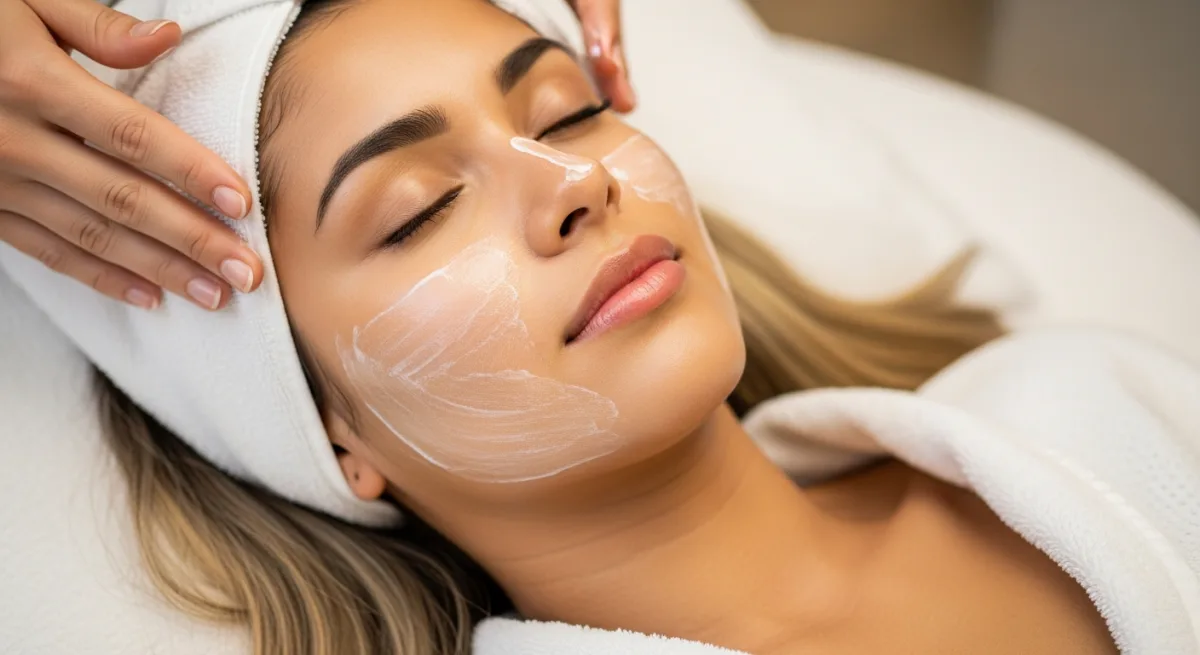
Enzymatic masks are perhaps the least well-known of the group, but they have a very specific and valuable role. They work with proteolytic enzymes — mainly from fruits such as papaya (papain) or pineapple (bromelain) — that dissolve dead cells on the surface of the skin without any rubbing or abrasive particles.
This makes them ideal for sensitive skin that needs cell renewal but cannot tolerate mechanical exfoliation. They are also a good option after more intensive treatments, when the skin is in recovery and needs a gentle touch. The sensation during application may include a mild tingling or warmth, which is the sign that the enzymes are active.
The result is skin that feels softer to the touch, with a finer texture and a more even tone. They do not produce the same immediate glow that an acid might deliver, but they are far gentler and can be used more frequently without compromising the skin barrier.
Sheet masks: hydrogel, bio-cellulose, and fabric
Sheet masks are the ones you see most on social media, because the “face covered” look is visually striking. But beyond the image, they are useful tools when chosen well.
Hydrogel masks are made from a gel-like material that retains a large amount of water and active ingredients. They are very effective for emergency hydration and for calming the skin after procedures such as deep cleansing or peeling. Bio-cellulose masks, derived from bacterial fermentation, adhere much more closely to the contours of the face and allow active ingredients to reach the entire surface more evenly. Fabric masks are the most affordable and versatile option; although they have less adherence than the previous two, they are still useful as a complement within a protocol.
What sets a spa sheet mask apart from the ones you buy at a pharmacy is not just the price: it is the concentration of active ingredients, the quality of the material, and — above all — the fact that it is applied as part of a complete protocol that includes cleansing, exfoliation, and serums beforehand. That preparation is what allows the mask to deliver its full potential.
How to choose the right mask for your skin
The choice does not depend on a single factor. Your esthetician will consider the current state of your skin — which can vary considerably from one visit to the next — the goal of the treatment, the time of year, and any previous procedures you may have had. That is why the initial consultation at the start of each session is not just a formality: it is real information that changes the outcome.
As a general guide, these are the most common pairings:
| Skin type or concern | Most suitable mask |
|---|---|
| Oily skin with enlarged pores | Clay (bentonite or green clay) |
| Dehydration or lack of radiance | Alginate with hydrating serum |
| Mature skin or loss of firmness | Cosmetic plaster or firming alginate |
| Sensitive skin needing renewal | Enzymatic |
| Post-procedure or calming | Hydrogel or bio-cellulose |
| Combination skin with mixed needs | Zone-by-zone protocol with different types |
This table is a guide, not a rule. Skin is dynamic, and what works on one visit may not be ideal three weeks later. The advantage of going to a spa with trained professionals is precisely that: the approach adapts to you, not the other way around.
If you would like to see which facial treatments are currently available — including the complete protocols that incorporate masks — you can check the Services page for up-to-date details. And if you already know what you want, you can book your appointment directly from the Reservations page.
Aqua Belleza Spa is located at Cra 11 #98-14, in the Chicó neighborhood in northern Bogotá, near Calle 98. If you have questions about which treatment is best suited to your skin before booking, you are also welcome to reach out through the Contact page and we will be happy to guide you.
Related references
Frequently Asked Questions
- How often should I get a facial mask at the spa?
- It depends on your skin type and the goal of the treatment. In general, a session every two to three weeks is enough for normal or combination skin. Skin with specific needs — such as intense dehydration or excess sebum — may benefit from more frequent sessions during an initial phase, always guided by your esthetician.
- Can I get a facial mask if I have active acne?
- Yes, but the choice of mask matters a great deal. Clay or charcoal masks can help control excess oil, while highly occlusive or nourishing masks may not be the best fit. The best approach is to discuss it with your esthetician before the session so she can tailor the protocol to your skin.
- Is a BB Glow mask the same as a conventional facial mask?
- Not exactly. BB Glow is a treatment that combines a micro-infusion technique with pigmented serums; the mask is just one part of the complete protocol. Unlike a conventional mask that is applied and removed, BB Glow works in layers and has a longer-lasting effect on skin tone.
- Does getting a mask at the spa hurt?
- Most masks are completely painless and form part of a relaxing experience. Plaster or alginate masks can create a tightening sensation as they set, but they do not cause pain. If at any point you feel a burning sensation or discomfort, let your esthetician know immediately.
- What should I do after a facial mask?
- Avoid direct sun exposure for the first few hours, skip heavy makeup on the same day, and apply the moisturizer your esthetician recommends. If the treatment included acids or active ingredients, wearing sunscreen the following day is essential.