
Hair
How to prepare your hair before a full color service
Getting a full color service is one of those decisions that can completely transform how you look and how you feel. But there is something many people do not find out until it is too late: the final result does not depend solely on the dye or the colorist’s skill. It depends, to a great extent, on how your hair arrived in the chair.
Hair that is well prepared absorbs pigment more evenly, the color lasts longer, and the process is less damaging to the hair fiber. Hair that arrives with no preparation at all can bring surprises: uneven results, tones that do not match what was requested, or hair that feels dry and brittle just days after the service. Not because the colorist did anything wrong, but because the starting point was not right.
This guide is designed to help you arrive at your next color appointment with your hair in the best possible condition. It is not about following a complicated ritual or buying expensive products. It is about understanding what your hair needs before undergoing a chemical process, and making simple decisions ahead of time.
Why the condition of your hair affects the color result
Before getting into what to do, it is worth understanding why it matters. Hair dye works on the cuticle, which is the outer layer of the hair shaft made up of small overlapping scales. For the pigment to enter and bond correctly, those scales need to open in a controlled way during the chemical process.
When hair is weighed down with products, oils, or silicone residue, the cuticle has an extra coating that blocks even pigment penetration. The result can be a tone that varies from one section to another, or one that simply does not match the shade you chose. On the other hand, if hair arrives overly porous because it has already been over-processed, the scales are unevenly open and the pigment enters in an uncontrolled way, producing patchy results and much shorter color longevity.
Pre-color preparation aims to bring your hair to the most balanced state possible: neither overloaded nor excessively porous. That middle ground is where color performs best.
The pre-color wash: when and with what
One of the most common questions before a color appointment is whether you need to arrive with clean hair. The short answer is: not entirely. The ideal is to wash it between 24 and 48 hours before the service, not on the same day.
The natural sebum your scalp produces during that period acts as a protective barrier against the chemicals in the dye. That natural oil reduces the chance of irritation and helps make the process less aggressive on the skin. If you arrive with freshly washed hair, that protection is gone and your scalp is left more exposed.
That said, arriving with excessive product buildup is not ideal either. If in the past few days you used very heavy masks, hair oils, or products with dense silicones, it is better to do a wash with a clarifying shampoo one or two days before. This type of shampoo removes residue without stripping the hair, and leaves the cuticle in better shape to receive the color.
How to assess the true condition of your hair before the appointment
We often arrive at a color appointment with a clear idea of what we want, but without having really evaluated the actual state of our hair. That assessment makes the difference between a successful process and one that ends in frustration.
There are some signs that indicate your hair needs attention before receiving a full color service. If your ends feel crunchy or split easily when you wrap them around your finger, there is damage to the hair fiber that could worsen with the chemical process. If your hair absorbs water very quickly when wet and then feels rough as it dries, it has high porosity, meaning pigment can enter unevenly. And if you already have a previous color that is very faded or has uneven bleaching, the base the dye will work on is not uniform.
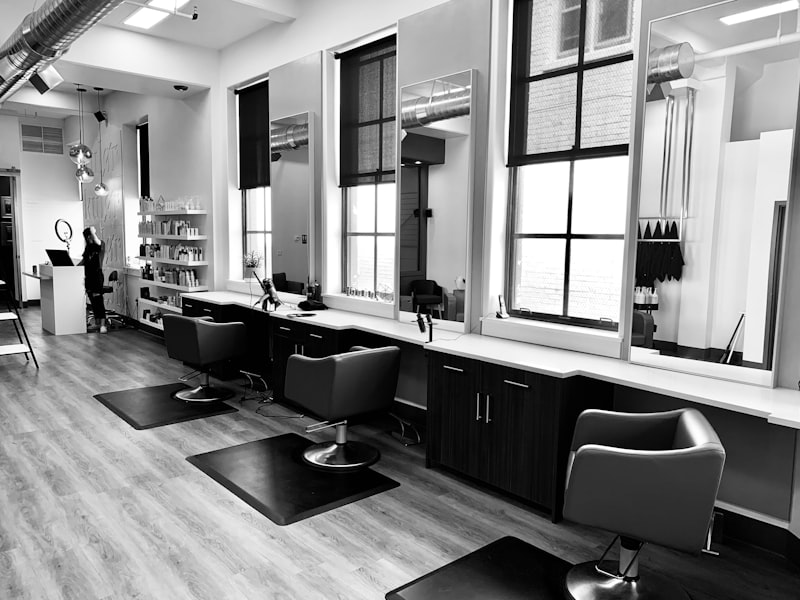
None of this means you cannot get your hair colored. It means it is worth discussing with your colorist before starting. At Aqua Belleza Spa, the pre-service consultation is part of the process: the professional assesses the condition of your hair and can adjust the technique or recommend a prior treatment if needed.
Pre-color treatments: when they help and when they do not
There is a common belief that doing a deep conditioning treatment before coloring is always beneficial. It is not that straightforward. It depends on the condition of your hair and the type of treatment.
If your hair has very high porosity, a pre-color hydration treatment can help even out the cuticle and allow the pigment to enter more uniformly. In these cases, the treatment acts as an equalizer that prepares the surface to receive the color. However, if the conditioning treatment is very dense or contains high concentrations of oils and silicones, it can have the opposite effect: creating a barrier that prevents the dye from penetrating.
What is useful in almost every case is a trim beforehand, even a minimal one. Removing the most damaged ends before coloring has two advantages: the color is not wasted on fiber that will be cut off afterward anyway, and the final result looks more even because the dye works on hair in better condition. It does not have to be a drastic cut — a small trim of a few centimeters is enough.
The allergy patch test: a step you should never skip
If this is your first time getting a full color service, or if you are going to use a different brand or formula from what you have used before, the allergy patch test is not optional. It is a basic safety measure.
The test involves applying a small amount of the dye to the inside of your elbow or behind your ear, then waiting 48 hours to see if there is any reaction. An allergic reaction to the components of hair dye can range from mild irritation to a more intense response that requires medical attention. Doing the test in advance allows you to identify any sensitivity before the product is applied to your entire scalp and hair.
If you have had your hair colored several times with the same formula without any reaction, the test is not strictly necessary at every visit. But if you changed products, if your scalp has been particularly sensitive lately, or if you went through a period of significant hormonal changes, it is worth repeating. Sensitivities can develop at any time, even in people who have never had a previous reaction.
The week before your appointment: what to avoid and what to do
Preparation does not start the day before. Ideally, it begins a week ahead with a few simple decisions that make a real difference in the condition of your hair.
The first thing to avoid is intense heat styling without a heat protectant. Flat irons and curling wands at very high temperatures lift the cuticle and increase porosity right before a process that is already going to open the hair fiber. If you need to use heat that week, always apply a heat protectant and work at moderate temperatures.
It is also a good idea to stop using heavy hair oils, protein-heavy masks, and products with water-insoluble silicones. These ingredients build up on the cuticle and are difficult to remove with a regular wash. If you want to moisturize your hair that week, opt for a lightweight conditioner or a gentle hydrating mask without dense oils.
What you can do is make sure your scalp is in good shape. Avoid scratching or irritating it in the days leading up to your appointment. If you have active dandruff or any scalp condition, it is best to mention it to your colorist before proceeding with the coloring.
A quick checklist of things to keep in mind that week:
- Wash your hair with a clarifying shampoo two to three days before the appointment
- Stop using oils and heavy masks from that point on
- Avoid intense heat without a heat protectant
- Do not scratch or irritate your scalp
- Schedule the allergy patch test 48 hours in advance if needed
- Get a trim if your ends are very damaged
What to expect on the day of your appointment
You arrived prepared. Now it is time to trust the process and the professional who will be taking care of you. There are a few things worth knowing to make the experience comfortable and the result what you are hoping for.
Arrive with your hair down and free of accessories that could get in the colorist’s way. Avoid tight ponytails or braids that leave marks in your hair, as they can create areas with different tension that affect how the dye absorbs. If your hair is very tangled, you can gently detangle it at home before you leave, but do not brush it forcefully right before the application.
Communicate clearly what you want. If you have visual references — photos you have saved or images you have seen online — bring them. A colorist can work much more effectively with a concrete reference than when trying to interpret a verbal description. It is also important to mention any previous chemical treatments you have had: straightening, prior bleaching, keratin treatments. That information changes how the color is formulated and applied.
If you are in Bogotá and moving around the northern part of the city, Aqua Belleza Spa is located on Cra 11 near Calle 98, an easily accessible area. You can browse the available coloring services before your appointment to arrive with a clear idea of your options, and make your reservation directly online to secure the time slot that works best for you.
A full color service is a process worth preparing for properly. Not because it is complicated, but because hair that arrives in good condition responds better, the result lasts longer, and the process is less damaging. That shows from day one and keeps showing weeks later.
Related references
Frequently Asked Questions
- Can I wash my hair on the day of my color appointment?
- Ideally, no. The natural sebum on your scalp acts as a protective barrier against the chemicals in hair dye. If you arrive at the spa with very dirty hair or heavy product buildup, the colorist can do a gentle cleanse before applying the color.
- How far in advance should I stop using oil-based products?
- Two to three days before your appointment is enough. Heavy oils can create a film over the hair cuticle that blocks pigment absorption and leads to uneven results.
- Do I need a deep conditioning treatment before coloring?
- It depends on the condition of your hair. If it is very porous or damaged, a pre-color hydration treatment can help even out porosity and produce a more uniform result. However, if your hair is in good shape, it is not essential. Your colorist can advise you during the consultation.
- Can I get my hair colored if my scalp is irritated?
- It is not recommended. The chemicals in hair dye can intensify any existing irritation. If your scalp is sensitive, red, or has small lesions, wait until it has fully recovered before your appointment.
- What happens if I skip all preparation?
- The color may still take, but the risk of uneven results, shorter pigment longevity, and greater hair damage increases. Preparation is not an optional step if you want the color to last and look great from day one.
- How often can I get a full color service?
- As a general rule, it is recommended to wait six to eight weeks between full color applications to give your hair time to recover. This can vary depending on the type of dye, the technique used, and the condition of your hair.