
Hair
Can you dye your hair when it's humid outside? What you need to know before coloring
Bogotá’s weather gives no warning. In the northern part of the city, around Calle 98 and Cra 11, you can step out under bright sunshine and return home in a steady drizzle. That unpredictability doesn’t just complicate your wardrobe — it raises real questions about certain beauty treatments, especially hair color. The question comes up constantly in consultations: can you dye your hair when it’s humid outside, or is it better to wait for a clearer day?
The short answer is yes, you can — but with some important nuances. Ambient humidity doesn’t cancel the coloring process, but it does affect it. Understanding why helps you make better decisions, whether you’re heading to a professional salon or thinking about doing it at home.
This article explains how humidity interacts with color chemistry, what adjustments a professional makes to compensate, and what care you should take before and after your appointment to protect your investment in your hair.
How humidity affects hair structure
To understand the issue, you need to start with how hair works. Each strand has an outer layer called the cuticle, made up of microscopic scales that open or close depending on temperature, pH, and ambient humidity. When the air is very humid, those scales tend to open slightly and the hair absorbs moisture from the air, making it more porous than usual.
That increased porosity might sound like a good thing for coloring, but it isn’t necessarily. More porous hair absorbs pigment quickly, yes — but it also releases it more easily. The result can be a color that looks intense right after the appointment and fades faster than expected, or one that doesn’t distribute the tone evenly along the strand.
On top of that, the moisture the hair absorbs from the air can act as an unintentional dilutant for the formula. If the colorist applies dye to hair that is already loaded with humidity, the mixture behaves differently than it would under dry or controlled conditions. That doesn’t mean the result will necessarily be bad, but it does require a trained eye to compensate.
The difference between ambient humidity and wet hair
There’s a distinction worth clarifying because it causes frequent confusion. High ambient humidity — the kind you feel on a rainy day in Bogotá — is different from applying dye to literally wet hair. These are two situations with different effects.
Applying dye to soaking-wet hair is a mistake that directly dilutes the formula and can prevent the pigment from penetrating properly. Some colorists do apply certain techniques to slightly damp hair — certain balayage or blending methods, for example — but that is a deliberate, controlled technical decision, not the result of failing to dry the hair beforehand.
Ambient humidity, on the other hand, acts more subtly. It doesn’t ruin the process, but it can extend processing time because scalp temperature regulates differently when the air is saturated with moisture. In a climate like Bogotá’s, where humidity can shift within hours, an experienced professional already factors this into the way they work.
What a professional adjusts when humidity is high
An experienced colorist doesn’t work from a fixed formula regardless of conditions. They observe the hair, assess its porosity, consider the day’s environment, and adjust accordingly. That might mean modifying the developer volume, the exposure time, or the application method.
When humidity is high, some of the most common adaptations include working in a space with a stable temperature, using porosity-equalizing or conditioning products before applying color, and in cases of very porous hair, applying a porosity primer so the dye takes more evenly. None of these are emergency measures — they are part of everyday professional practice.
The type of dye also matters. Permanent oxidative dyes, which use peroxide to open the cuticle and deposit pigment, are relatively robust against environmental variation as long as they are applied correctly. Direct or semi-permanent dyes, which use no oxidant and simply deposit color on the surface of the cuticle, are more sensitive because they rely more heavily on external conditions to adhere well.
Post-color care matters just as much as the conditions on the day
Many people worry about the conditions on the day of their appointment but overlook what happens afterward. Freshly applied color is vulnerable for the first 48 to 72 hours, regardless of whether the day was humid or dry. During that window, the cuticle is still closing and the pigment is still settling in.
During those first hours, keeping your hair dry is essential. If you step outside and it’s raining, an umbrella is non-negotiable. Water — especially unfiltered rainwater with no conditioner — can carry pigment away before it has fully sealed. This is most noticeable with red and copper tones, which have larger pigment molecules that take longer to lock inside the cuticle.
The first wash also matters a great deal. Use lukewarm or cold water — never hot — because heat opens the cuticle and encourages color to fade prematurely. A shampoo formulated for color-treated hair makes a real difference: it contains no harsh sulfates that strip pigment and usually includes ingredients that help seal the cuticle. If you can, apply a conditioner or mask for color-treated hair at least once a week during the first month.
Signs that humidity affected your color result
Sometimes the process looks fine in the salon but the final result isn’t what was expected. If humidity worked against you, there are specific things you may notice in the days that follow.
One of the most common signs is unevenness: some sections of the hair came out darker or lighter than others, especially at the ends, which tend to be more porous. You might also find that the tone looks duller than expected, as if the color didn’t “take” with its usual intensity. With lightening services or balayage, humidity can cause the lifting process to be slower or uneven.
If you notice any of this, the most sensible step is to go back to the salon and discuss it before attempting any at-home correction. A poorly executed touch-up can complicate the hair far more than it helps. At Aqua Belleza Spa, the colorist team can assess the result and determine whether an adjustment is needed or whether the color simply needs more time to fully settle. You can browse available color services on the Services page.
When it actually makes sense to reschedule
There are situations where, even though coloring in humidity is technically possible, the wiser move is to wait. Not because humidity makes it impossible, but because the condition of the hair or the environment is too compromised to guarantee a good result.
If your hair is already very damaged or has extreme porosity from previous treatments, a high-humidity day can amplify that irregularity. In that case, one or two hydration or reconstruction treatments before the color appointment are worth doing to stabilize the fiber. Arriving at a color service with healthier hair always improves the final outcome.
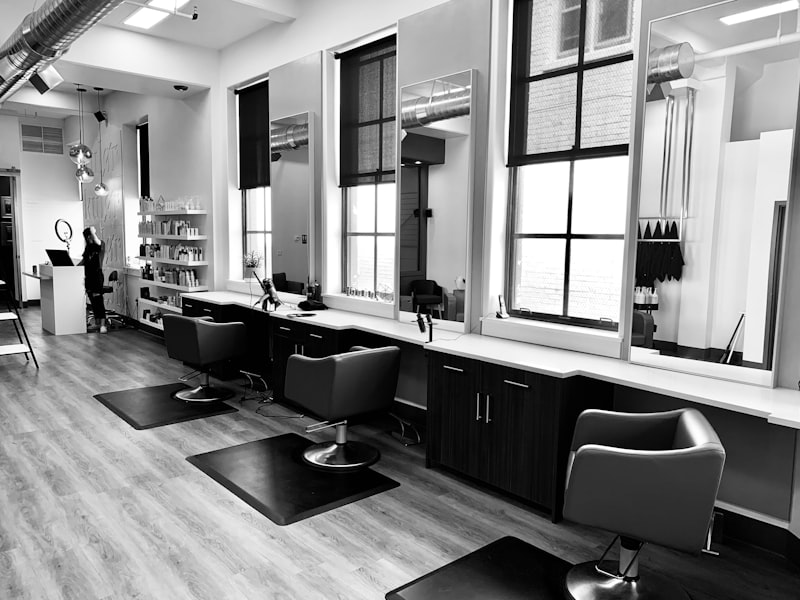
It’s also reasonable to reschedule if there’s a technical issue with the space where the service will be done: poor ventilation, very low or high temperature, or conditions that prevent comfortable work. A good salon maintains control over its interior environment, which largely neutralizes whatever is happening outside. If you have questions about how to prepare for your appointment, you can reach us through the Contact page before you come in.
Preparation before your appointment: what you can control
While you can’t control Bogotá’s weather, you can arrive at your appointment in the best possible condition. These are the things that genuinely make a difference.
- Wash your hair one or two days before, not the same day. A little natural sebum on the scalp provides protection during dye application.
- Avoid silicone-based products in the days leading up to your appointment, as they create a barrier that can prevent pigment from penetrating properly.
- Arrive with dry hair and no product buildup. If the day is very humid and you’ve been outside, dry your hair before entering the salon.
- Tell your colorist about any recent treatments: straightening, keratin, perms, or previous color. That information changes the formula used.
- Avoid excessive heat in the days before, as it weakens the cuticle and leaves hair more porous than ideal.
Preparing well doesn’t guarantee the weather will cooperate, but it does give the professional the best possible conditions to do their work. If you’d like to book your appointment in advance, you can do so directly on the Reservations page.
Related references
Frequently Asked Questions
- Does rain ruin freshly applied color?
- If your hair gets wet before the color has fully sealed, the pigment can run or lighten unevenly. Ideally, avoid getting your hair wet for at least 48 hours after coloring.
- Does wet hair absorb color better?
- Not necessarily. Wet hair has a slightly open cuticle, which may seem advantageous, but it also dilutes the formula and makes it harder for the pigment to penetrate evenly. Most oxidative dyes are formulated to be applied to dry or slightly damp hair, according to the manufacturer's instructions.
- What happens if dye is applied in very high humidity?
- High humidity can extend processing time, alter scalp temperature, and in some cases affect the final color intensity. A professional will adjust the formula or exposure time to compensate.
- Can I get a balayage on a rainy day?
- Yes, though it requires extra care. Balayage is applied in sections, and ambient temperature and humidity influence how the pigment lifts. In a salon with controlled conditions, the result should not be compromised.
- How long after coloring can I wash my hair?
- The general industry recommendation is to wait 48 to 72 hours before the first wash, to allow the pigment to seal the cuticle. Use lukewarm or cold water and a color-safe shampoo.
- Does humidity affect all types of dye equally?
- No. Direct dyes (semi-permanent, no oxidant) are more sensitive to humidity because they do not penetrate the cuticle in the same way. Permanent oxidative dyes are somewhat more resistant, but they are still influenced by extreme environmental conditions.