
Facials
Glycolic acid facial at the spa: what it does, how it's applied, and what to expect
If you’ve ever read the label on a serum or heard an esthetician mention a “chemical peel,” you’ve probably come across the name glycolic acid. It’s one of the most widely used ingredients in professional facial treatments — and also one of the most misunderstood. Many people hear the word “acid” and assume it must be aggressive or risky. The reality is far more straightforward than that.
Glycolic acid belongs to the alpha hydroxy acid family, commonly known as AHAs. It’s derived primarily from sugarcane and has one characteristic that makes it especially useful in cosmetology: its molecule is very small, which allows it to penetrate the outer layer of the skin with ease. That doesn’t mean it “burns” the skin — it simply means it can work where other ingredients can’t reach.
This article explains what glycolic acid actually does when applied in a professional facial, which skin types it suits, what you can expect during and after the treatment, and what aftercare you need to make the most of the results. No exaggerated promises — just the information you need to make an informed decision.
What glycolic acid does to your skin
Skin continuously renews its cells, but that process slows down over time and is also affected by factors like sun exposure, stress, and hormonal changes. When dead cells accumulate on the surface, skin can look dull, feel uneven in texture, or develop spots that take longer to fade.
Glycolic acid works by dissolving the bonds that hold those dead cells together in the outermost layer of the skin, known as the stratum corneum. By loosening that layer, exfoliation happens chemically and evenly — without the friction of a physical scrub. The result is a smoother surface with a greater capacity to absorb the active ingredients applied afterward.
Beyond that exfoliating effect, glycolic acid has a positive influence on collagen production. It’s not an immediate or dramatic effect, but with regular, sustained use it helps the skin maintain a firmer structure. It’s worth clarifying that this is not the same as erasing wrinkles or treating medical skin conditions; it’s a cosmetic benefit that improves overall appearance when used correctly.
Which skin types it suits
One reason glycolic acid is so widely used in professional facials is its versatility. It works well across several skin types, though the protocol changes depending on each person’s characteristics.
On oily or congestion-prone skin, glycolic acid helps keep the surface cleaner by removing the excess dead cells that can mix with sebum and clog pores. On dull skin or skin with mild pigmentation from sun exposure or post-inflammatory marks, its exfoliating action gradually helps those hyperpigmented areas lighten. On mature skin, it’s used to improve texture and radiance.
Sensitive skin requires more care. Glycolic acid isn’t off-limits for this skin type, but the concentration and exposure time must be lower, and the professional needs to assess tolerance before moving to a more intensive protocol. That’s why it matters that the facial is performed by someone trained — not simply applying a product at home with concentrations that don’t match your skin type.
How a glycolic acid facial is performed at a spa
A professional glycolic acid facial isn’t simply a matter of applying the product and waiting. It’s a protocol with several stages, each serving a specific purpose.
First comes cleansing. The skin must be free of makeup, sunscreen, and any residue before the acid makes contact with it. Skipping this step would reduce the treatment’s effectiveness and could cause unwanted reactions. After cleansing, many protocols include a toning step to balance the skin’s pH, since glycolic acid works best in a specific pH environment.
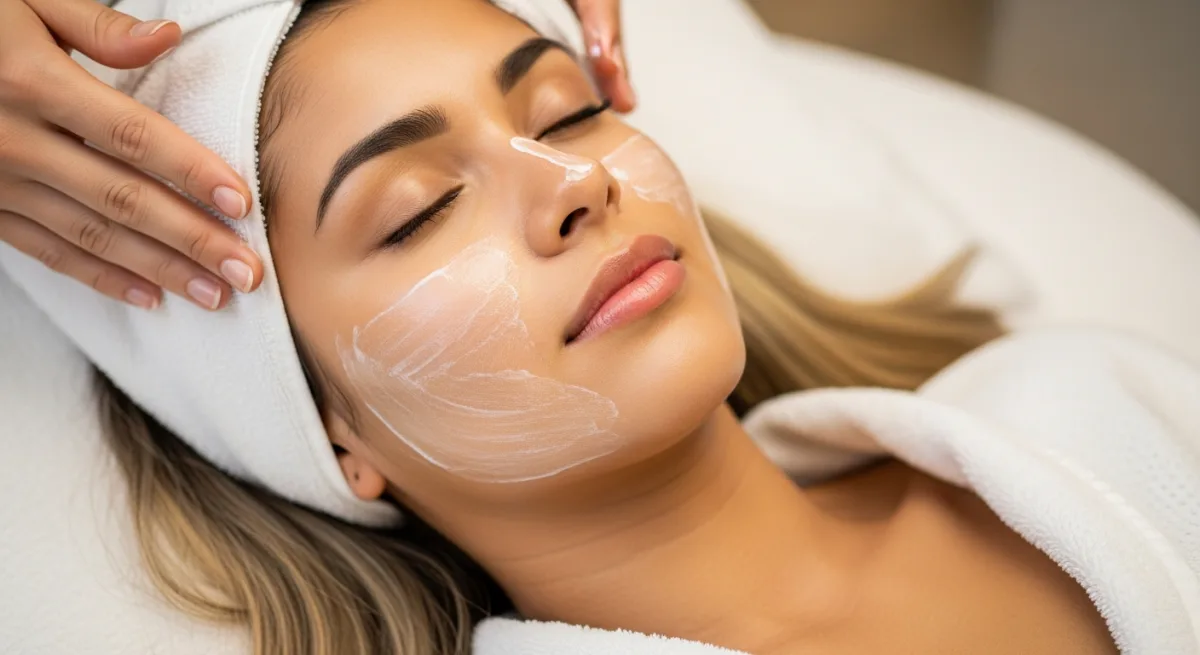
The acid is applied in a controlled manner — usually with a brush or gauze — avoiding the eye and lip area. How long the product stays on the skin depends on the concentration used and how each person’s skin responds. The esthetician monitors the reaction throughout. When the right point is reached, the acid is neutralized with a specific solution or removed with water. Then comes the calming and hydration phase: serum, mask, and sunscreen are the standard close to the protocol.
What to expect after the treatment
The first few hours after the facial may bring slight redness and a warm feeling in the skin. That’s normal and usually fades within a few hours. In some cases — especially if it’s your first time or a higher concentration was used — there may be some gentle flaking over the following days. There’s no cause for concern; it’s simply the renewal process the treatment activated.
What does change noticeably is texture. Many people notice their skin feeling softer to the touch from the very next day. Radiance also improves, though the most visible results for pigmentation or texture build up over regular sessions across several weeks.
At-home care after the facial is just as important as the treatment itself. For at least a week, it’s best to avoid other exfoliants, retinol, or high-concentration vitamin C products, because the skin has already been stimulated and adding more actives can irritate it. Sunscreen is essential every day — not just after the facial but as a permanent habit — because glycolic acid increases the skin’s sensitivity to the sun.
The role of sunscreen after a glycolic acid peel
This point deserves its own space, because it’s where most people fall short after a glycolic acid facial. Chemical exfoliation leaves the skin in a more receptive state — which is precisely its advantage — but it also means that sun exposure without protection can create new spots or worsen existing ones. It would be counterproductive to have a treatment aimed at improving pigmentation and then step outside without sunscreen.
The sunscreen recommended after a glycolic acid facial should be broad-spectrum, meaning it covers both UVA and UVB rays. In Bogotá, UV radiation can be high even on overcast days due to the altitude, so this applies year-round — not just during periods of intense sunshine. Living near Calle 98 or anywhere else in the city doesn’t change that reality.
The difference between a superficial and a deeper peel
Not all glycolic acid treatments are the same. The product’s concentration and the pH of the formulation determine how deep the effect reaches. In a beauty spa, standard protocols work on the superficial layer of the skin — what’s known as a superficial peel. That’s enough to improve texture, radiance, and mild pigmentation, and it involves minimal recovery time.
Medium and deep peels are medical procedures performed under medical supervision, with much higher concentrations and a longer recovery process. That is not what happens at a beauty spa, and it’s important to be clear about that distinction. A glycolic acid facial at a spa is designed to be a maintenance and progressive improvement treatment — not a medical procedure.
This distinction also explains why spa facial results are gradual. That’s not a limitation of the treatment; it’s simply how a safe and sustainable protocol works. With each session, the skin’s texture and radiance improve cumulatively.
| Peel type | Typical concentration | Where it’s performed | Typical recovery |
|---|---|---|---|
| Superficial (spa) | Low to moderate | Spa or beauty center | Minimal, brief mild redness |
| Medium | Moderate to high | Medical or dermatology clinic | Several days, visible flaking |
| Deep | High | Specialized medical procedure | Weeks, requires medical follow-up |
How to incorporate glycolic acid into a facial care routine
A professional glycolic acid facial works best when backed by a consistent at-home skincare routine. That doesn’t mean buying ten products — it means using the right ones in the right order.
In the morning, the basics are a gentle cleanser, a moisturizer suited to your skin type, and sunscreen. At night, after cleansing, you can incorporate a serum or toner with low-concentration glycolic acid to maintain the exfoliating effect between sessions. How often you use it depends on how well your skin tolerates the ingredient: some people use it two or three times a week, others on alternate days.
What’s worth avoiding is combining glycolic acid with other potent actives in the same application. Retinol, for example, works better in a separate routine, because using both together can unnecessarily irritate the skin. An esthetician can guide you on building that routine based on the treatments you’re doing at the spa.
At Aqua Belleza Spa, when a glycolic acid facial is performed, the team always talks with the client about what they’re using at home — precisely to avoid the in-cabin protocol and the home routine working against each other. If you’d like to see the facial treatments available, you can check the Services page for current options.
If you have specific questions about whether this type of facial is right for your skin before booking, you can reach us through the Contact page or stop by the spa at Cra 11 and Calle 98. And when you’re ready to schedule your appointment, the Reservations page has everything you need to do so.
Related references
Frequently Asked Questions
- Does glycolic acid hurt during a facial?
- It's normal to feel a tingling or mild burning sensation while the acid is active on your skin. That feeling usually fades within a few minutes. If it becomes intense, the professional can neutralize the product right away.
- How often is a glycolic acid facial recommended?
- It depends on the concentration used and the condition of your skin. For spa sessions with moderate concentrations, a typical cycle is once a month, though the specialist can adjust that based on how your skin responds.
- Can I wear makeup on the same day as the treatment?
- Ideally, wait at least 24 hours before applying makeup. Your skin is more receptive and sensitive after the facial, and giving it that rest time helps deliver better results.
- Does glycolic acid work equally well for oily and dry skin?
- Yes, though the protocol varies. On oily skin it helps unclog pores and control excess sebum. On dry skin, combined with hydrating ingredients, it helps active ingredients penetrate more effectively. The key lies in the concentration and the rest of the protocol.
- What's the difference between a glycolic acid peel at home and one at a spa?
- Over-the-counter products have low concentrations due to regulations. At a spa, a trained esthetician can use higher concentrations with greater control over exposure time, which allows for more noticeable results with lower risk when done correctly.
- Can I have this facial if I'm pregnant?
- During pregnancy and breastfeeding, it's recommended to consult your doctor before any acid-based treatment. At Aqua Belleza Spa we always ask about your health status before starting any protocol.