
Facials
Salicylic acid in facial cleansing: what it actually does for acne-prone skin
If you have acne-prone skin, you have probably heard about salicylic acid more than once. It shows up in toners, serums, drugstore creams, and above all in professional facial cleansing protocols. But there is a meaningful gap between hearing it mentioned and truly understanding what it does inside your skin — and it is worth closing that gap carefully.
This post is not a list of products you should buy. It is an honest explanation of how this acid works when applied in a professional setting, what happens to your skin during and after a deep cleanse with it, and why concentration and technique matter just as much as the ingredient itself. If you are considering a facial cleanse to address acne, this information will help you arrive at your appointment with clear expectations.
The good news is that salicylic acid has been used in cosmetology for decades and its mechanism of action is well documented. It is not a passing trend or a fashionable ingredient. It is a beta-hydroxy acid with specific properties that make it particularly useful for oily and comedone-prone skin.
Why salicylic acid is different from other exfoliants
When we talk about chemical exfoliation, most people think of alpha-hydroxy acids: glycolic, lactic, mandelic. All of them are water-soluble, meaning they work primarily on the skin’s surface, dissolving the bonds between dead cells so they shed more easily. They do an excellent job on texture and radiance.
Salicylic acid is different because it is lipid-soluble. That distinction, which can sound technical and minor, has a very concrete practical consequence: it can penetrate the inside of the pore, which is lined with sebum. While a water-soluble acid works on the surface, salicylic acid travels down the follicular canal and acts from the inside out.
That makes it the most logical ally for comedonal acne — the type of acne that forms when a pore becomes clogged with a mixture of dead cells and sebum. The blackhead you see on the surface is the oxidation of that plug. Salicylic acid does not just exfoliate the skin around the pore; it works inside it to dissolve that buildup.
What happens inside the pore during treatment
When an esthetician applies a salicylic acid product to your skin, the acid begins breaking the bonds that hold dead cells together inside the follicle. This process is called keratolysis, and it essentially means that the plug blocking the pore becomes easier to remove.
At the same time, salicylic acid has a moderate sebum-regulating effect. It does not permanently eliminate sebum or alter the long-term function of the sebaceous glands, but it does help temporarily reduce the amount of oil in the pore during and after treatment. For combination or oily skin, that translates into a feeling of cleaner, less shiny skin in the days that follow.
Another relevant aspect is its mild anti-inflammatory action. Salicylic acid belongs to the same chemical family as aspirin, and while it does not act as a medication, it does have properties that can visually calm the redness associated with inflamed blemishes. This does not make it a medical treatment for acne, but it does make it more versatile than other exfoliants that might irritate already inflamed skin.
What a professional deep cleanse with this active looks like
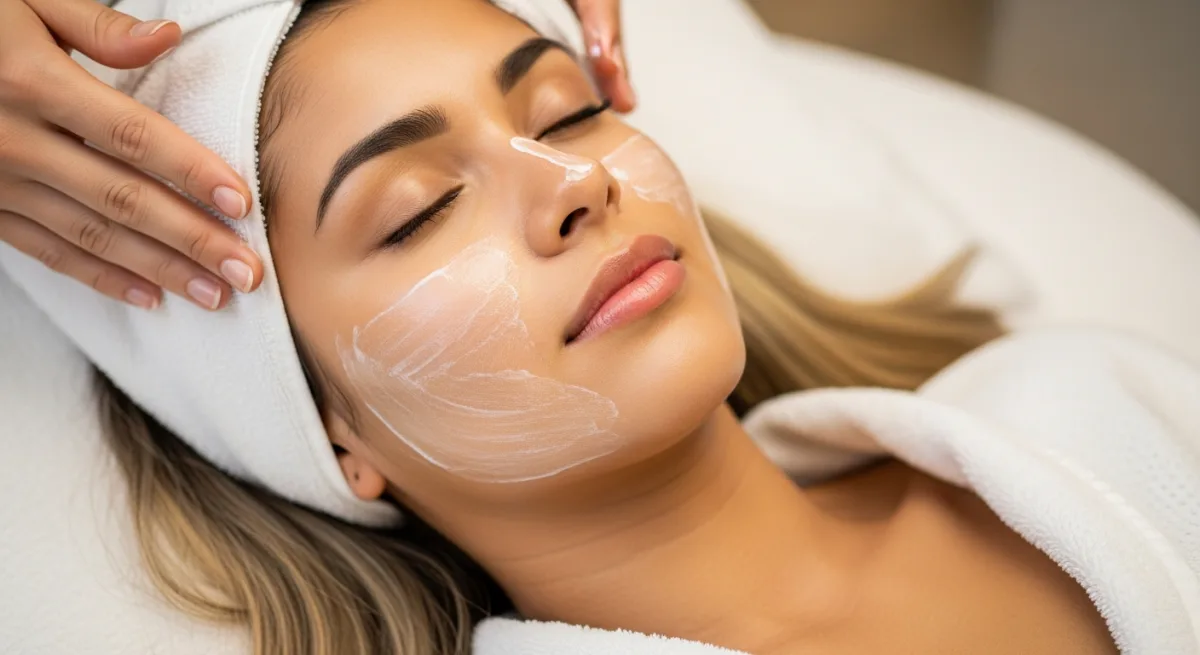
A professional facial cleanse is not simply applying a salicylic acid product and calling it done. The protocol has several stages, each serving a specific function that helps the acid work better and allows your skin to tolerate it without becoming irritated.
First comes the initial cleanse, which removes makeup, sunscreen, and surface impurities. Then, depending on the spa’s protocol, there may be a steam phase or hydrating ampoules to soften the skin and make extraction easier. Next, the salicylic acid exfoliant is applied — it may come as a gel, solution, or mask — and left on for a controlled amount of time based on the concentration and your skin’s sensitivity.
Comedone extraction, if it is part of the protocol, comes after the acid has done its work of softening the pore contents. That order matters: attempting extraction without preparing the skin first can cause more irritation and leave marks. At the end of the treatment, a soothing mask and sunscreen are applied — the latter is essential because the skin is more sensitive to UV radiation after any chemical exfoliation.
Concentrations and why you should not experiment on your own at home
Salicylic acid is available in over-the-counter products in concentrations ranging from 0.5% to 2%. In professional settings, concentrations can be higher and are applied with specific techniques and exposure times. That difference is not a minor detail.
A higher concentration does not automatically mean better results. It means greater potential for irritation if not used correctly. Dehydrated skin, skin with a compromised barrier, or skin already using retinoids at home may react disproportionately to a concentration that would be perfectly tolerable on another skin type. That is why a pre-treatment skin assessment is part of the treatment itself, not just a formality.
At Aqua Belleza Spa, before starting any facial protocol, a review of your skin and your at-home products is carried out. That step exists precisely to tailor the treatment to what your skin needs that day, rather than applying a one-size-fits-all protocol.
What to expect after the session and how to care for your skin
In the first few hours after a deep cleanse with salicylic acid, your skin may look slightly pink and feel more sensitive than usual. That is normal and expected. The chemical exfoliation removed dead cells and stimulated cell renewal, so the skin is in a state of active regeneration.
Over the following two or three days, there may be some mild flaking, especially in areas where comedones were most concentrated. That flaking is not a sign that something went wrong; it is part of the renewal process. The important thing is not to rush that process by scrubbing or mechanically exfoliating your skin at home.
| What to do afterward | What to avoid |
|---|---|
| Wear sunscreen every day | Direct sun exposure without protection |
| Moisturize with fragrance-free products | Mechanical or chemical exfoliants at home |
| Cleanse gently with lukewarm water | Very hot water on the face |
| Let flaking happen on its own | Picking or rubbing peeling skin |
| Consult if there is an unusual reaction | Heavy makeup on the same day |
Sunscreen deserves special emphasis. After any chemical exfoliation, the fresh skin left exposed is more vulnerable to ultraviolet radiation, and unprotected exposure can trigger dark spots. In Bogotá, even on overcast days, UV radiation is considerable due to the altitude, so that step is not optional.
When salicylic acid is not enough on its own
Salicylic acid is a valuable ingredient, but it does not resolve every type of acne by itself. Deep cystic acne, severe hormonal acne, or established scarring require different approaches and, in many cases, the involvement of a dermatologist alongside cosmetological work.
What a professional salicylic acid cleanse can do is serve as part of a broader protocol. Combined with other actives such as azelaic acid, niacinamide, or vitamin C in subsequent sessions, and paired with a well-designed home routine, results build session by session. Consistency matters more than the intensity of a single treatment.
If you are in northern Bogotá and want to find out whether a deep salicylic acid cleanse is right for your skin, you are welcome to visit Aqua Belleza Spa, located on Cra 11 near Calle 98, or browse the facial treatments available on the Services page to see current options. If you already know what you need, you can book your appointment directly on the Reservations page.
Acne-prone skin deserves consistent attention and the right products — not quick promises. Understanding how each ingredient that touches your skin actually works is the first step toward making informed decisions about its care.
Related references
Frequently Asked Questions
- Does salicylic acid work for all types of acne?
- It works especially well on comedonal acne — the blackheads and whiteheads that form when pores become clogged. For severe inflammatory or cystic acne, salicylic acid can be part of the protocol, but it is generally combined with other active ingredients. A professional can assess your skin before deciding on the right concentration and frequency.
- How often can you get a salicylic acid facial cleanse?
- It depends on your skin's sensitivity and the concentration used. As a general rule, a deep cleanse with this active ingredient is performed every three to four weeks, giving the skin time to renew itself without becoming irritated. Your esthetician can adjust that frequency based on how your skin responds at each session.
- Does a salicylic acid facial cleanse hurt?
- It should not hurt. You may feel a mild tingling or warmth when the product is applied, especially if your skin is sensitive or the concentration is higher. If you feel intense burning, let the professional know immediately so she can adjust the exposure time.
- Can I wear makeup after the cleanse?
- Ideally, avoid makeup for the first few hours after the treatment. Your skin has just gone through an exfoliation process and needs to breathe. If you need to go out, use only a mineral sunscreen and skip foundations or compact powders that day.
- Does salicylic acid fade acne marks?
- It helps improve the appearance of post-acne marks by speeding up cell turnover, which can make those marks look less pronounced over time. It is not a depigmenting agent in itself, but it does prime the skin so that other actives targeting hyperpigmentation can work more effectively.
- Is it safe for darker skin tones or skin prone to discoloration?
- With the correct concentrations and exposure times, yes. Darker skin tones can be more susceptible to post-inflammatory hyperpigmentation, so it is important that the professional knows your phototype before applying the treatment. Using sunscreen afterward is non-negotiable.