
Facials
Post-deep facial cleansing care: how to protect your skin after the treatment
Leaving a deep facial cleansing with clean, glowing skin feels wonderful. But what you do in the hours and days that follow largely determines how long those results last. Many people take great care of their skin during the treatment and then, without realizing it, undo part of the work through habits that seem harmless: applying makeup too soon, going out in the sun without protection, or sticking to the same routine without adjusting anything.
This article is not a list of prohibitions. It is a practical guide to understanding what happens to your skin right after a deep cleansing, why it reacts the way it does, and what you can do to support its recovery in a smart way. Whether you already have an appointment booked or are thinking about scheduling one, this information will be useful from day one.
A deep facial cleansing is one of the most comprehensive treatments available for maintaining skin health, but it is also one that calls for the most mindful aftercare. Taking five minutes to read this can make a real difference in how your skin looks the following week.
What happens to your skin during the first few hours
A deep facial cleansing involves several steps that work together: cleansing, exfoliation, steam, comedone extraction, and, depending on the protocol, the application of soothing ampoules or masks. All of that is beneficial, but it also means your skin leaves the treatment in a more sensitive state than usual.
The pores have been opened with steam and worked during extraction. The skin surface may show some redness, especially in areas where there were comedones or blackheads. This is not a problem — it is the natural response of tissue that has just been stimulated. In most cases, that reaction settles on its own within 24 to 48 hours.
What matters is understanding that during those first hours, the skin barrier is more permeable than normal. That means it absorbs more, but it is also more vulnerable to external irritants such as sun exposure, pollution, makeup with occlusive ingredients, and heat. Being gentle during this period is not an overreaction — it is simply respecting the process that just took place.
Why sunscreen matters so much right now
Sunscreen is important every day, but after a deep facial cleansing it becomes non-negotiable. Freshly treated skin is more sensitive to ultraviolet radiation, and exposing it without protection can cause dark spots, irritation, and, over time, damage that works against everything the treatment was meant to improve.
In Bogotá, UV radiation can be deceptive. We are more than 2,600 meters above sea level, and even when the sky is overcast or the temperature feels cool, UVA and UVB rays hit with real force. If your appointment at Aqua Belleza Spa is near Calle 98 and you walk a few blocks or take a cab afterward, those minutes of exposure count. Apply a broad-spectrum sunscreen with SPF 50 or higher before stepping outside, and reapply if you will be outdoors for more than two hours.
Choose a lightweight formula — preferably a gel or fluid — that will not clog the pores you just had cleaned. Very thick or tinted sunscreens can be counterproductive at this stage. If you do not have a suitable one at home, this is a good moment to look into options and find one that suits your skin type.
Which products to use and which to pause temporarily
This is where many people make mistakes without realizing it. The skincare routine you follow normally may include active ingredients that are perfectly fine under regular conditions but too harsh for skin that has just been treated.
For the first five days after the cleansing, pause the following:
- Physical exfoliants: scrubs, brushes, or abrasive sponges. Your skin was already exfoliated during the treatment and does not need more right now.
- Chemical exfoliants: glycolic acid, salicylic acid, lactic acid in high concentrations. These can irritate a barrier that is still in recovery.
- Retinoids: retinol and its derivatives increase skin sensitivity, which is already elevated after the cleansing.
- Products with alcohol as a primary ingredient: these dry out the skin and can cause stinging in areas where extraction took place.
- High-concentration synthetic fragrances: these can trigger reactions in sensitized skin.
What you can and should use are gentle, soothing products. A hyaluronic acid serum helps maintain hydration without overloading the skin. A calming cream with ingredients such as allantoin, centella asiatica, or low-concentration niacinamide can help reduce redness and support recovery. Use mild, sulfate-free cleansers to avoid disrupting the skin’s pH.
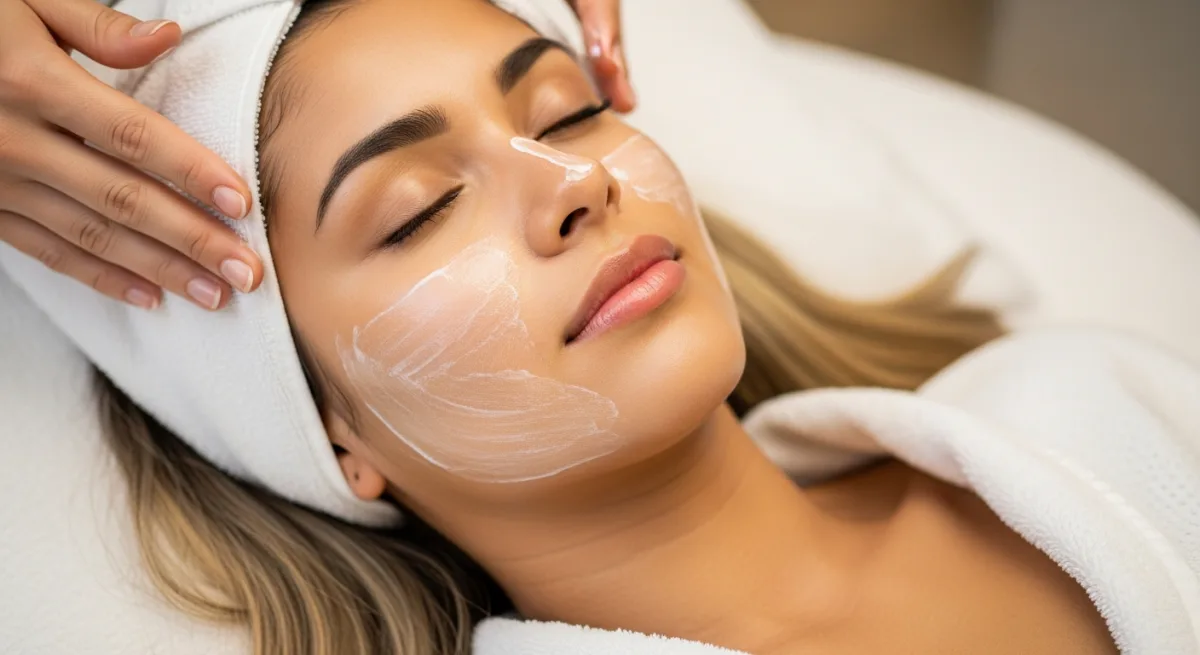
Hydration: inside and out
Hydration after a deep facial cleansing has two dimensions worth addressing separately. The first is topical hydration — what you apply directly to the skin. The second is systemic hydration, which comes from what you drink and eat.
After the treatment, your skin may feel slightly tight or dry, especially if you tend toward dry or combination skin. That does not mean you should layer on heavy creams. It means your skin needs humectants that work from within the stratum corneum, like hyaluronic acid, and gentle emollients that seal in that moisture without blocking pores. Applying your moisturizer to slightly damp skin, right after cleansing, boosts absorption.
On the internal side, drinking enough water in the days following the treatment supports the skin’s natural function and helps results hold longer. There is no single magic amount that works for everyone, but staying well hydrated is always a sound practice. Cutting back on alcohol and heavily processed foods during those days can also make a visible difference in how your skin looks.
Everyday habits that affect recovery
Beyond products, there are daily behaviors that directly influence how your skin recovers after a deep cleansing. Some are obvious; others less so.
Touching your face with your hands is one of the most common and most damaging habits during this period. Freshly worked pores are more susceptible to bacterial contamination, and hands — even when they do not look dirty — carry germs from every surface we touch throughout the day. If you feel the urge to check whether a spot remains or to press on an area, resist it. Any at-home manipulation after a professional extraction can lead to inflammation or infection.
Changing your pillowcase on the day of the treatment is a small step that helps more than it might seem. We sleep for several hours with our face pressed against that surface, and if it carries residue from previous creams, dust, or bacteria, all of that comes into direct contact with freshly treated skin. A clean pillowcase — ideally soft cotton — is a simple and effective measure.
Intense exercise, as mentioned earlier, is best postponed until the following day. The body heat generated by a workout dilates blood vessels and can intensify redness. Sweat combined with open pores creates a favorable environment for external bacteria to cause problems. A gentle walk is fine; an intense gym session is better saved for tomorrow.
How to sustain results over the long term
A deep facial cleansing is not a one-off event — it is part of a care routine that, when maintained consistently, produces visible and lasting results. The skin needs to be deeply cleansed on a regular basis because pores gradually become blocked with sebum, dead cells, and environmental pollution, no matter how well you wash your face at home.
The right frequency depends on your skin type and how it responds to treatments. An esthetician can guide you better than any general article, because they know your skin firsthand. If you would like to see which facial treatments are available and which ones might complement your cleansing, you can visit the Services page to explore current options.
Between sessions, your at-home routine makes a significant difference. Gentle cleansing morning and night, hydration suited to your skin type, sunscreen every day, and avoiding an excess of aggressive actives without professional guidance. The goal is not a complicated ten-step routine — it is being consistent with the basics. Skin that is well cared for at home arrives at each treatment in better condition, and that shows in the results.
If you have questions about which routine suits your skin type best, or if you would like to book your next cleansing, you can reach us through the Contact page or book directly on the Reservations page. The Aqua Belleza team is happy to help with no strings attached.
Related references
Frequently Asked Questions
- When can I wear makeup after a deep facial cleansing?
- Ideally, wait at least 24 hours before applying makeup. Right after the treatment, your pores are open and your skin is more sensitive, and covering that surface with foundations or powders can clog what you just had cleaned out.
- Is it normal for my skin to be red or sensitive after the cleansing?
- Yes, completely normal. The extraction of comedones and the manipulation of the skin trigger a mild inflammatory response that usually fades within 24 to 48 hours. If the redness persists for more than two days or comes with intense heat, check in with your esthetician.
- How often should I get a deep facial cleansing?
- Frequency varies depending on your skin type. In general, a deep cleansing every three to four weeks works well for combination or oily skin, while dry or sensitive skin can space it out a little more. Your esthetician can guide you based on your specific case.
- Can I go out in the sun after the cleansing?
- Direct sun exposure is not recommended during the first two days. If you need to go outside, apply a broad-spectrum sunscreen with SPF 50 or higher, even on cloudy days. In Bogotá, UV radiation can be intense even on overcast days.
- What products should I avoid in the days following the treatment?
- Avoid physical and chemical exfoliants, retinoids, high-concentration acids, and any product with alcohol as a primary ingredient. Your skin needs time to recover before it can tolerate strong actives.
- Can I exercise on the same day as my deep facial cleansing?
- It is better to wait until the following day. Sweat, body heat, and friction from clothing or towels can irritate skin that has just gone through extraction. Open pores are also more vulnerable to bacteria in a gym environment.