
Lashes & Brows
Brow threading or waxing: which technique suits your skin
When you think about “getting your brows done,” it is easy to focus only on removing the hair. But the result that makes brows look natural and well framed starts much earlier: with the design. Threading and waxing are just two ways to reach that shape, and which one suits you depends on your skin and your hair, not on what is trending.
This guide is not here to sell you one technique over the other. It is here so you understand what happens at each step, the real difference between threading and waxing, and what to ask at your appointment so you can choose with confidence.
It all starts with brow mapping
Before touching a single hair, a good esthetician maps the brow. Using a pencil and a measuring thread, she marks the three points that define the shape: where the brow should start, where the arch peaks, and where it should end. Those points are placed according to your own features —the position of your eyes, your nose, and the proportions of your face— not a generic template.
That preliminary outline is what marks the extra hair to remove and the hair to protect. Without mapping, any removal method is just “taking out hairs”; with mapping, the removal builds a shape designed for your face.
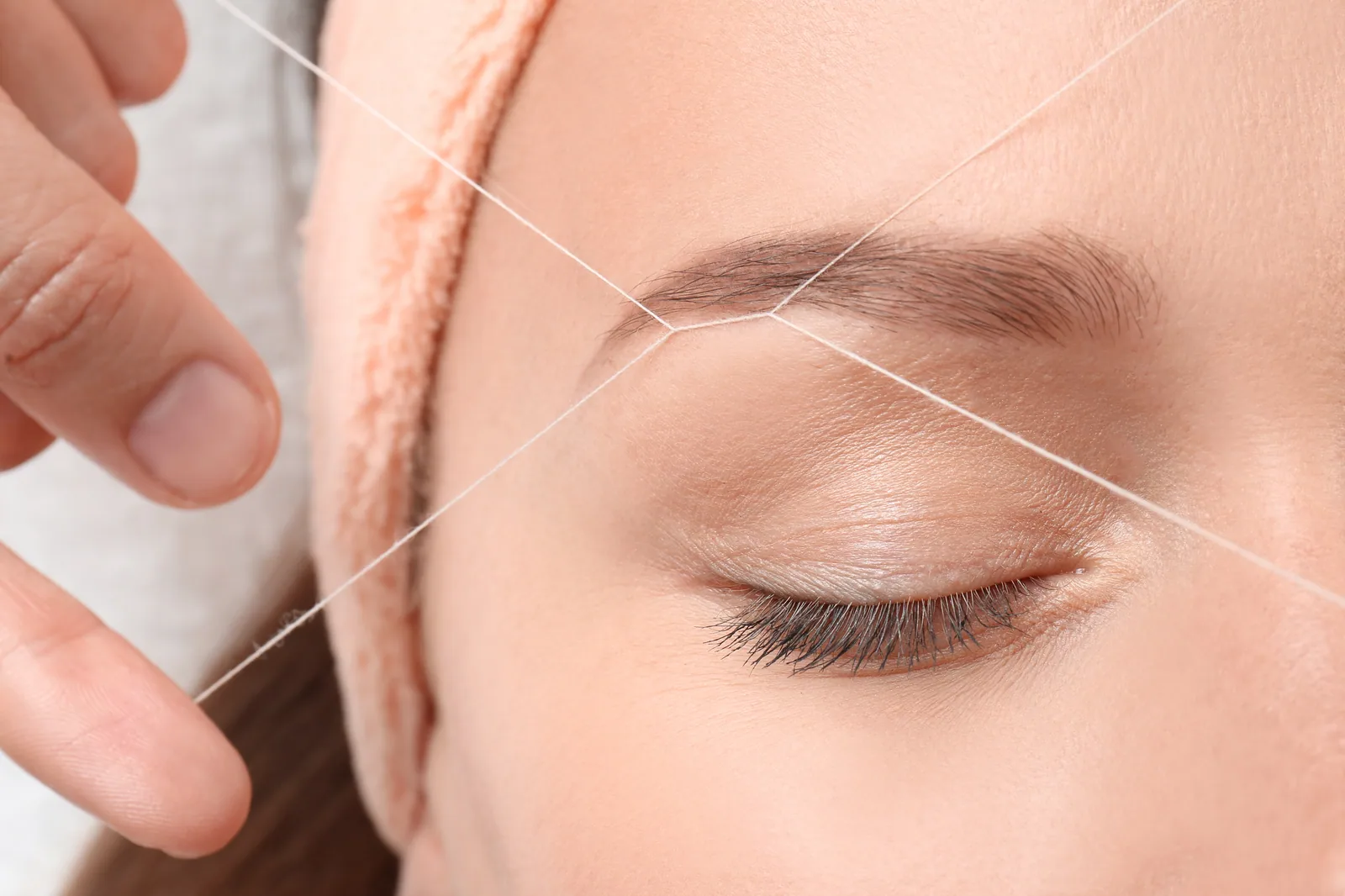
Threading: hair-by-hair precision
Threading uses a twisted cotton thread that catches and lifts the hair from the root, one or a few hairs at a time. By following the mapped lines, it allows very fine control —ideal for defining the outline and cleaning up small hairs without dragging the surrounding skin.
Because it uses no heat and no products on the skin, it is a gentle option for sensitive or reactive skin, and for anyone using retinol or acids who cannot be waxed. The trade-off: it is a more detailed and slightly slower process, and you may feel small, targeted tugs during removal.
Waxing: fast and very clean
Warm wax is applied along the entire area to be removed and lifted off in one pull with a strip, taking several hairs at once. It is faster than threading and leaves the area very clean and even, so it works well when there is denser hair or you want a crisp finish in little time.
Its limits come down to skin: it is not the best option for very sensitive, very thin, or mature skin, nor for anyone using retinoids or acids, because waxing can lift skin along with the hair. That is why the pre-treatment assessment is key.
How to choose based on your skin and hair
There is no “best” technique in the abstract. The decision depends on concrete factors:
- Sensitive, reactive skin, or retinol/acids: threading is usually the safest option, since it applies no heat and does not lift skin.
- Dense hair and tolerant skin: waxing is fast and leaves a very clean finish.
- Fine detail and outline: threading allows hair-by-hair precision.
- Larger areas and little time: waxing covers more area at once.
In many cases, the same esthetician combines both: waxing for the general clean-up of the area and threading to refine the outline according to the design. What matters is that the method is chosen after assessing your skin, not before.
When you want us to design your brows with the technique that best suits your skin, at Aqua we guide you through every step. Book online anytime or message us on WhatsApp and we will gladly advise you.
Frequently Asked Questions
- Is brow mapping the same as hair removal?
- No. Mapping is the step that comes first: your artist measures and marks the ideal brow shape for your features, defining where the brow should start, where the arch peaks, and where it should end. Hair removal —by threading or waxing— is only the tool used to remove the extra hair and reach that design. A good map matters more than the removal method.
- Does threading or waxing hurt more?
- Both techniques remove hair from the root, so there is a brief sensation at the moment of removal. Threading feels like small, targeted tugs and applies no heat to the skin. Waxing removes several hairs at once, so the pull is broader but faster. Tolerance varies from person to person.
- Can I wax my brows if I use retinol or acids?
- It is best to avoid waxing if you use retinoids, exfoliating acids, or other products that thin or sensitize the skin, because waxing can lift skin along with the hair. In those cases threading is usually the safer option. Always tell your esthetician which products you use.
- How often should I have my brows mapped?
- On average, every three to four weeks, when the hair grows back enough to remove and keep the shape clean. The initial map is the foundation; later appointments simply maintain that shape. Your esthetician will advise the interval based on your regrowth rate.