
Lashes & Brows
How long does a lash lift last and when is it time for a touch-up
If you have ever wondered how long a lash lift lasts before booking an appointment, the short answer is: between six and eight weeks on average. But the longer answer is more interesting, because that range depends on several factors that are largely within your control. Understanding what happens to your lashes after the procedure helps you get the most out of it and know exactly when it is time to go back.
A lash lift is one of those treatments that, once you try it, becomes part of your routine. The reason is simple: it works with what you already have. It adds no fibers, requires no adhesives, and involves none of the daily upkeep that extensions demand. The result is your natural lash, lifted and curled from the root, with an effect that can last several weeks with minimal maintenance. But “several weeks” is not a fixed number, and that is precisely what is worth understanding properly.
In this article I explain how the procedure works at the hair-structure level, what makes the effect last longer or shorter, how to care for your lashes afterward to protect your investment, and how to recognize the signs that a touch-up is due.
What happens to your lashes during a lash lift
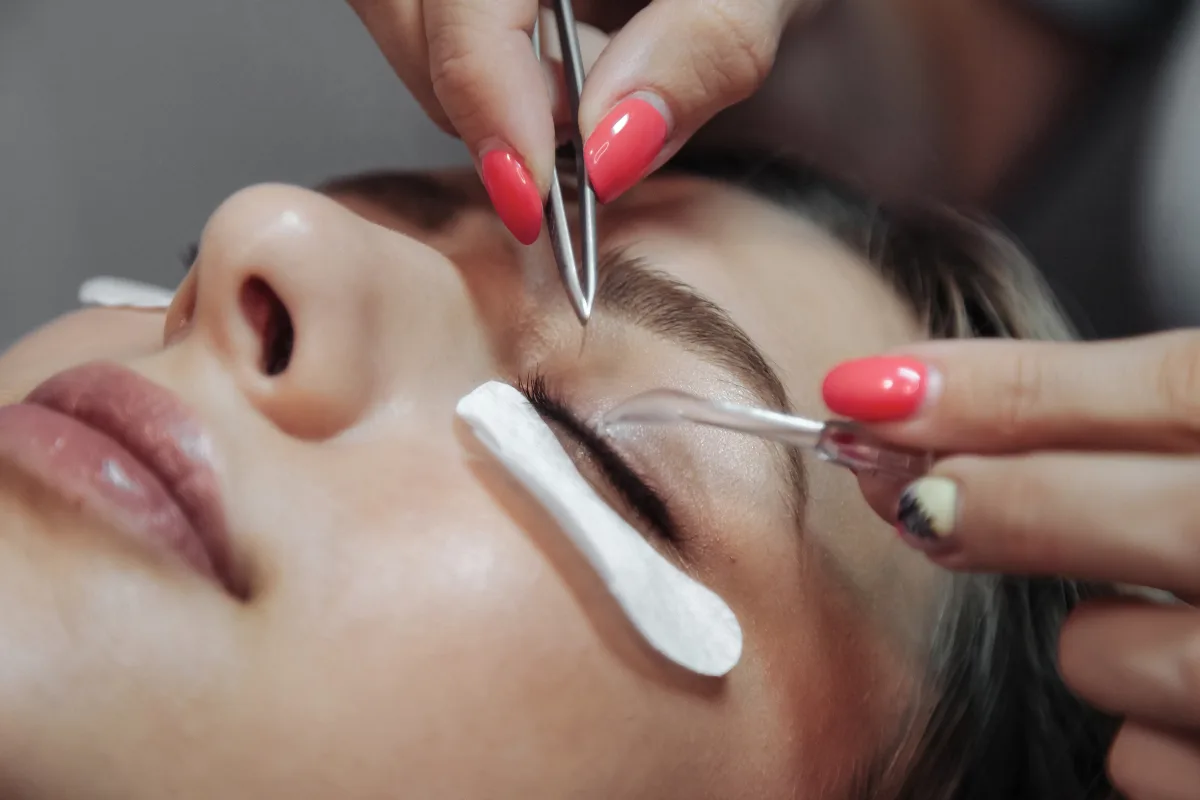
To understand how long the results last, it helps to know what a lash lift actually does at a structural level. Lashes, like all hair, are made up primarily of keratin. During the procedure, a solution is applied that temporarily opens the bonds in that keratin, allowing the hair to take on a new shape. A fixing solution is then applied to lock those bonds in the desired position — in this case, an upward curl from the root.
The result is not a surface-level wave or a mascara effect: the curl is built into the structure of the hair itself. That is why a lash lift does not “drop” when it gets wet or disappear when you wash your face, unlike what happens with a lash curler or a volumizing mascara.
What does happen over time is natural growth. Each lash has its own life cycle: it grows, matures, and falls out to make way for a new one. That cycle lasts between four and eight weeks depending on the person. As the lifted lashes grow out or shed and are replaced by new, untreated lashes, the lift effect gradually fades until a touch-up makes sense.
Why duration varies from person to person
Six to eight weeks is the most common range, but some people keep the effect for less time and others hold it a little longer. Those differences are not random — they reflect individual characteristics and everyday habits.
The hair growth cycle is the most decisive factor. If your lashes have a fast cycle, renewal happens sooner and the visible effect fades more quickly. There is not much you can do about that, but knowing it is useful for calibrating your expectations and planning touch-ups more precisely.
Lash texture and thickness also play a role. Fine lashes tend to absorb the lifting solution differently from thick lashes, which can affect both the intensity of the initial curl and how long it holds. Additionally, frequent use of oily products near the eye — such as oil-based makeup removers or rich eye-contour creams — can gradually soften the fixer’s effect over time. That does not mean you need to cut them from your routine, just apply them carefully so they do not saturate the lash area.
The first two days: the period that matters most
The first 24 to 48 hours after a lash lift are the most critical for how long the results last. During that window, the keratin bonds that were set in their new position are still consolidating, and anything that disrupts them can compromise the curl.
After that period, you can return to your normal routine. The lift is no longer fragile: you can wash your face, wear mascara, swim, or exercise without worry. The one recommendation that carries through over time is to favor water-based makeup removers over oil-based ones if you use products near the eyes regularly.
Many people underestimate those first hours because the result looks great immediately and it feels as though the procedure is “done.” Technically it is, but the hair needs that window to stabilize fully. Respecting that initial aftercare is probably the easiest thing you can do to get the maximum life out of your lash lift.
How to care for your lash lift to extend the effect
Once the initial period is over, maintaining a lash lift is minimal — which is precisely one of its advantages. Even so, certain habits make the difference between a result that lasts six weeks and one that lasts eight.
Brushing your lashes with a spoolie every morning helps keep the curl even and separates hairs that may have clumped together overnight. It takes thirty seconds and keeps the effect looking neat. If you wear mascara, apply it with root-to-tip strokes without pressing into the base, and choose water-based formulas for easy removal without rubbing.
When it comes to removing makeup, the key is gentleness. Rubbing hard around the eye not only irritates the skin but can repeatedly bend or flatten lashes in the wrong direction, gradually weakening the curl over time. A soft cotton pad pressed against the eyelid for a few seconds and then drawn downward is enough. Avoid exfoliating discs or rough cloths in that area.
When it is time for a touch-up: the signs to watch for
There is no single date that applies to everyone, but there are clear signs that a lash lift is nearing the end of its cycle. The most obvious is that the lashes visibly begin to lose their curl: where there was once a defined arc from the root, the tips now drop or the curl looks uneven, with some lashes still curled and others straighter because they are new, untreated growth.
Another sign is that you find yourself reaching for a lash curler again to achieve the effect you previously had naturally. If the curler becomes indispensable in your routine once more, the lift has run its course.
As a general rule, scheduling a touch-up between week six and week eight works well for most people. Doing it before the effect disappears entirely makes it easier to discuss adjustments with your technician — whether to change the rod size to modify the curl, add a tint, or keep exactly the same result. Waiting until nothing is left of the lift makes that conversation harder because there is no longer a visual reference point.
Lash lift versus lash extensions: a useful clarification
People exploring their lash options often have questions about the difference between a lift and extensions. They are distinct procedures with completely different approaches, and it is worth understanding that before deciding.
Lash extensions add artificial fibers to your natural lashes hair by hair using a specialized adhesive. The result can be more dramatic in volume and length, but it requires more frequent maintenance — generally every two to four weeks — and stricter aftercare to protect the adhesive. A lash lift, by contrast, adds nothing: it works exclusively with your natural lash, and upkeep is minimal.
The choice between the two depends on the result you are looking for and how much time you want to spend on aftercare. A lash lift is ideal for anyone who wants a natural, low-maintenance effect that enhances what they already have. Extensions are for anyone seeking more volume or length than their natural lashes provide. Neither is objectively better; they are different tools for different goals.
At Aqua Belleza Spa we offer both services, as well as brow lamination, henna, and other eye-area treatments. If you are unsure which one suits what you are looking for, you are welcome to ask us before booking. Details of each service and current pricing are on the Services page.
Planning your touch-up schedule in Bogotá
One of the advantages of a lash lift is that it fits easily into a personal care routine without feeling like an obligation. Every six to eight weeks, a session of roughly one hour, and you have curled lashes without a curler or mascara for that entire period. For many people in northern Bogotá managing busy schedules, that daily time saving is just as valuable as the aesthetic result.
If you are near Cra 11 and Calle 98 or in the surrounding neighborhoods of Chicó, Aqua Belleza Spa is just a few minutes away. You can book your appointment directly on the Reservations page or reach us through the Contact page if you have questions before committing.
The most useful thing you can do if it is your first time is to arrive with clean lashes — no mascara or product residue — and tell your technician about your daily routine. That information helps in choosing the right rod for the curl and anticipating any aftercare adjustments based on your specific habits.
Related references
Frequently Asked Questions
- Does a lash lift damage natural lashes?
- When applied correctly, a lash lift does not damage your lashes. The solution acts on the hair structure for a controlled period of time. The key is to choose an experienced professional and follow the recommended aftercare.
- Can I wear mascara after a lash lift?
- Yes, you can wear it from 48 hours after the procedure. A water-based mascara is recommended so it does not compromise the curl effect and can be removed easily without rubbing.
- Does a lash lift work the same on short lashes?
- A lash lift enhances the curl of what you already have, so on shorter lashes the result is visible but more subtle. A prior consultation with your technician will give you a realistic idea of the effect you can expect.
- Can I combine a lash lift with a lash tint or henna?
- Yes, and it is a very popular combination. The tint or henna is applied right after the lift, in the same session, to intensify the color and make lashes more visible without needing mascara.
- How long after a lash lift can I get my eyes wet?
- The first 24 to 48 hours are the most critical period. During that time avoid direct water on the eyes, steam, intense sweating, and any oily product near the lashes.
- Is a lash lift the same as lash extensions?
- No. A lash lift works with your natural lashes, curling and lifting them. Extensions add artificial fibers hair by hair. They are different procedures with different results and different aftercare requirements.